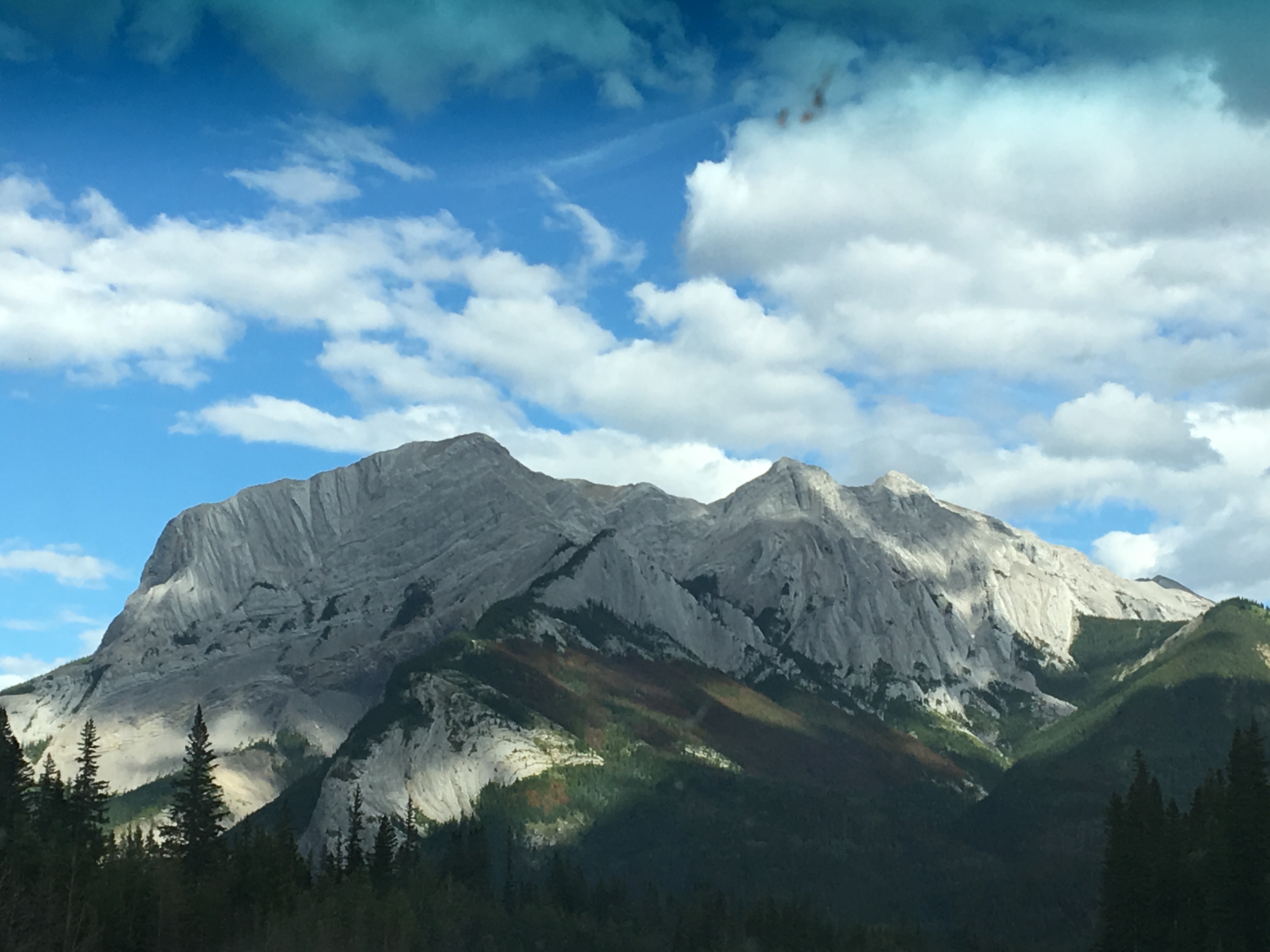
A mere 80 miles north of West Glacier are both of the Canadian Provinces, British Columbia and Alberta, home to the endearing and beautiful Lake Louise, Banff, Jasper and the incomparable Icefields Parkway. The provinces are separated by the Continental Divide, through the Jasper and Banff National Parks. This is the Canadian Rockies, a unique, dynamic and ever- changing mountain range. Though we have been here before, we returned with the same level of enthusiasm that we had the first time, for this area is another visual feast in both its magnitude and warmth.
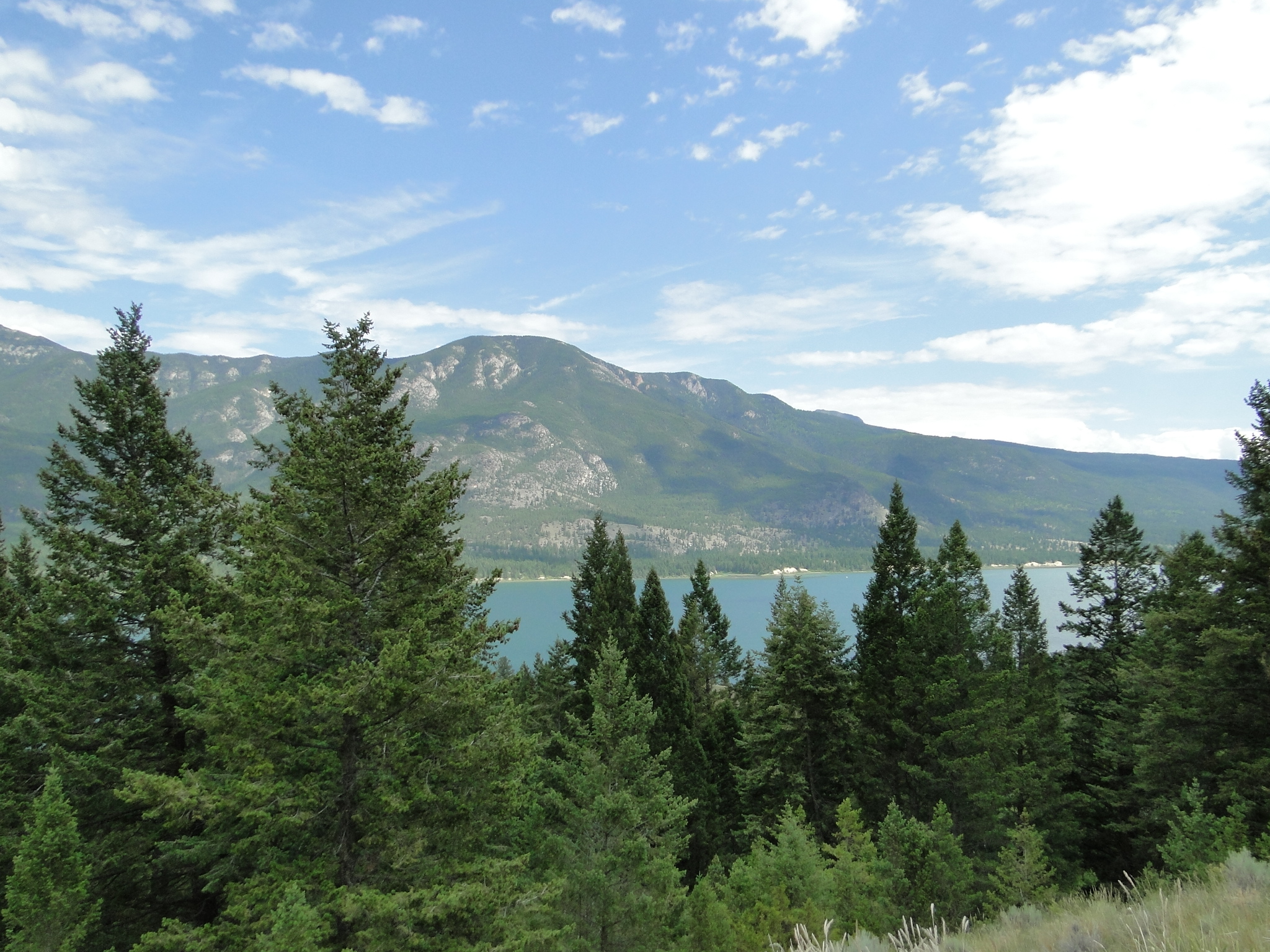
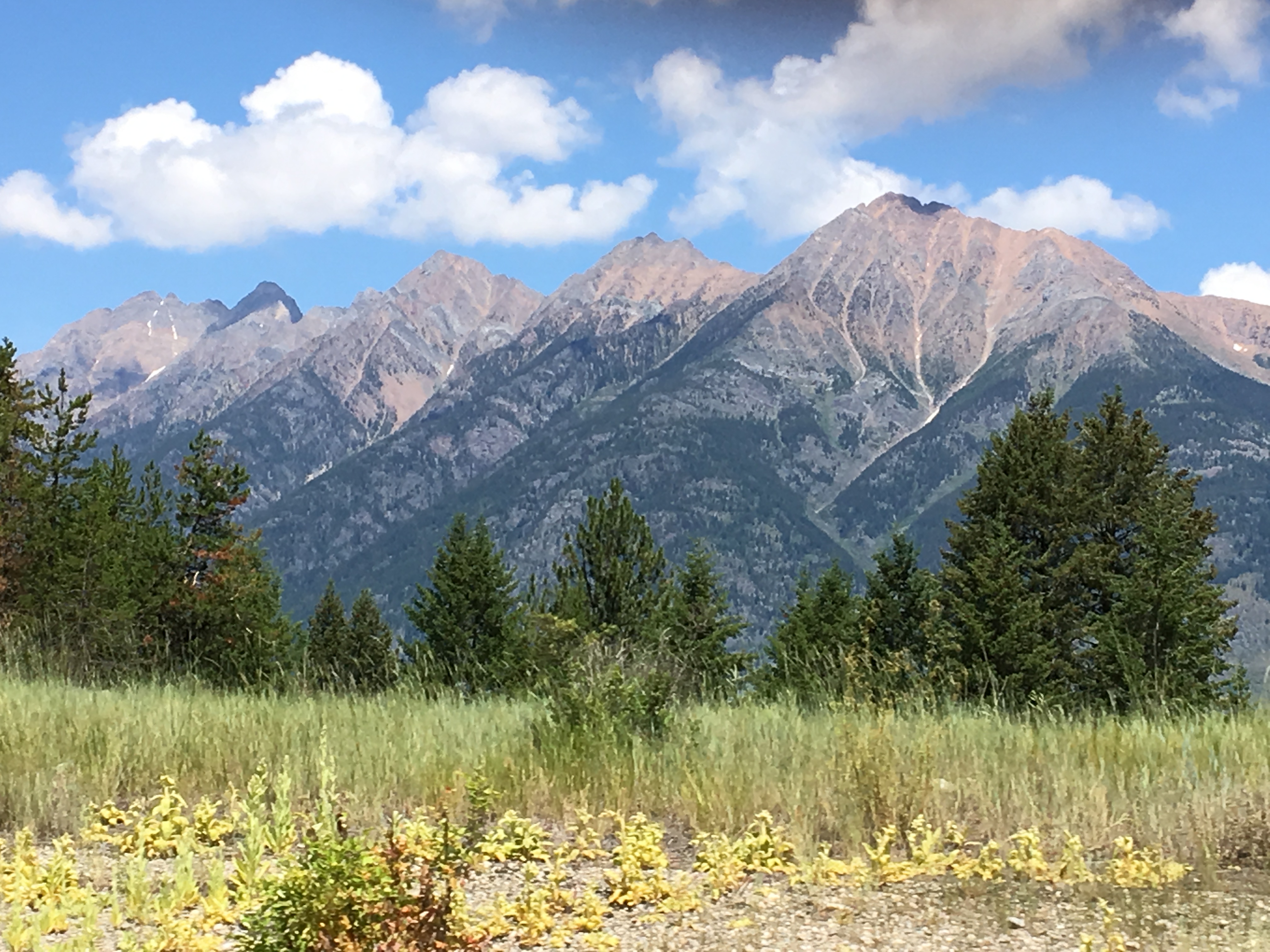
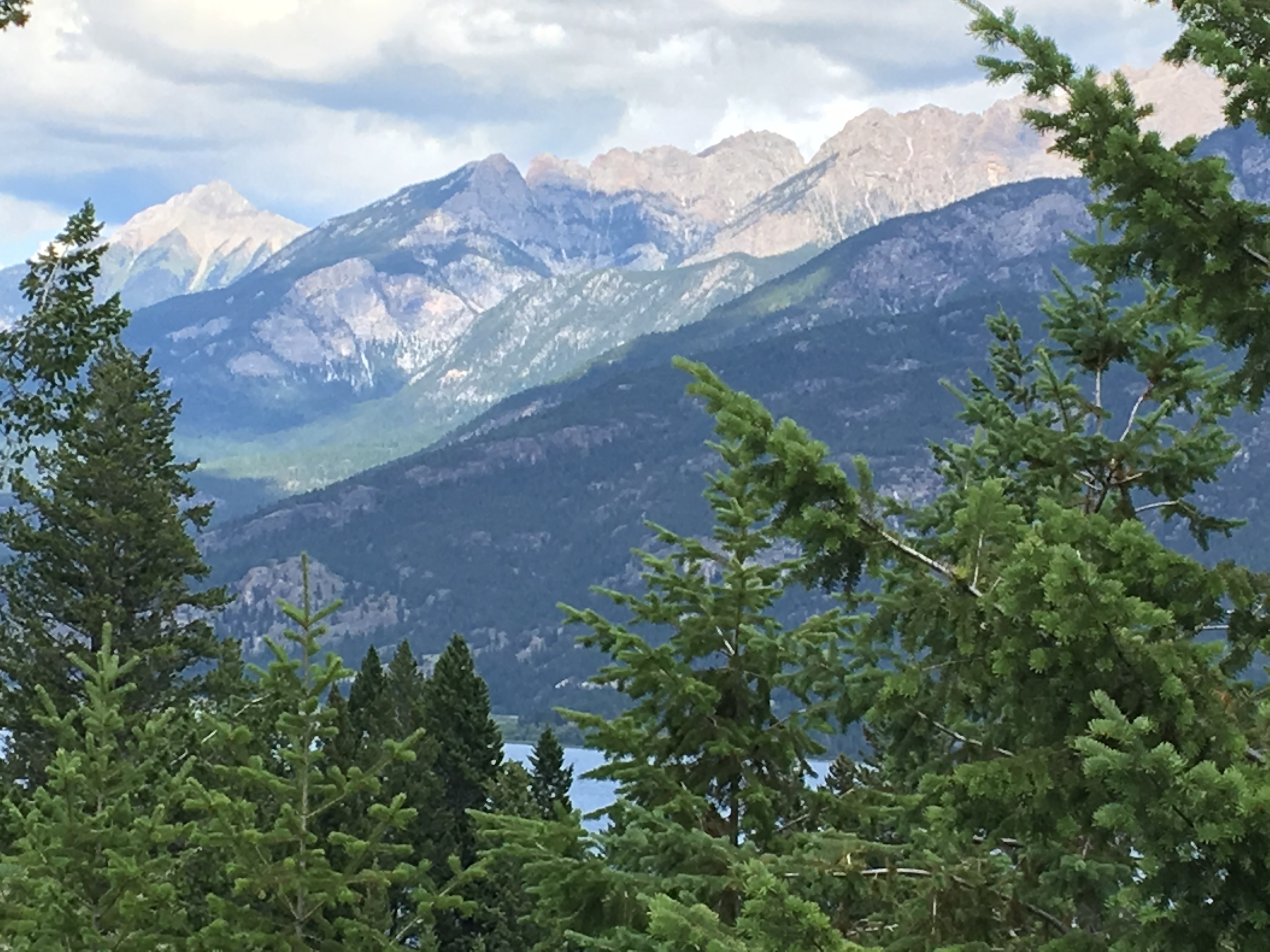
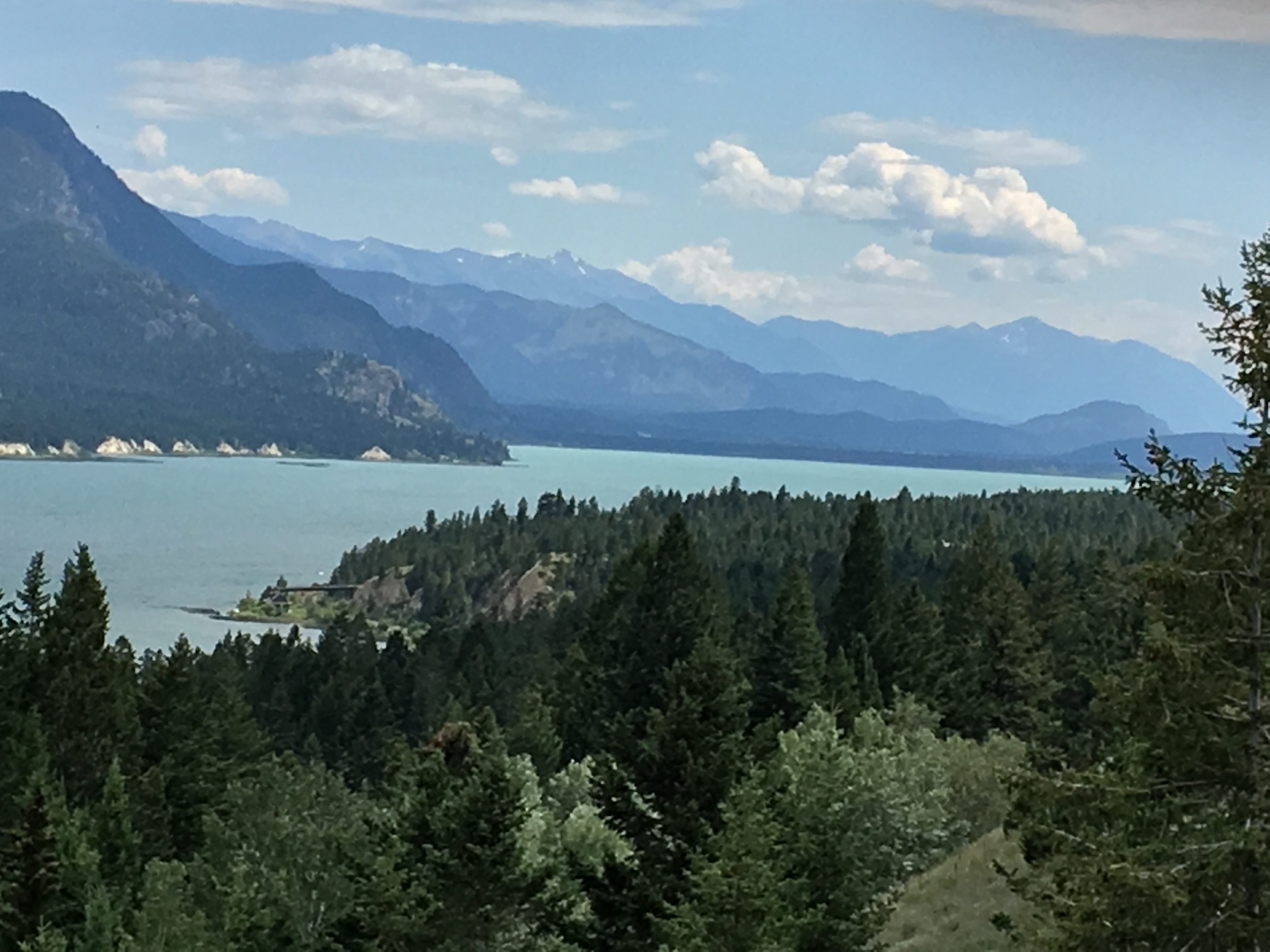
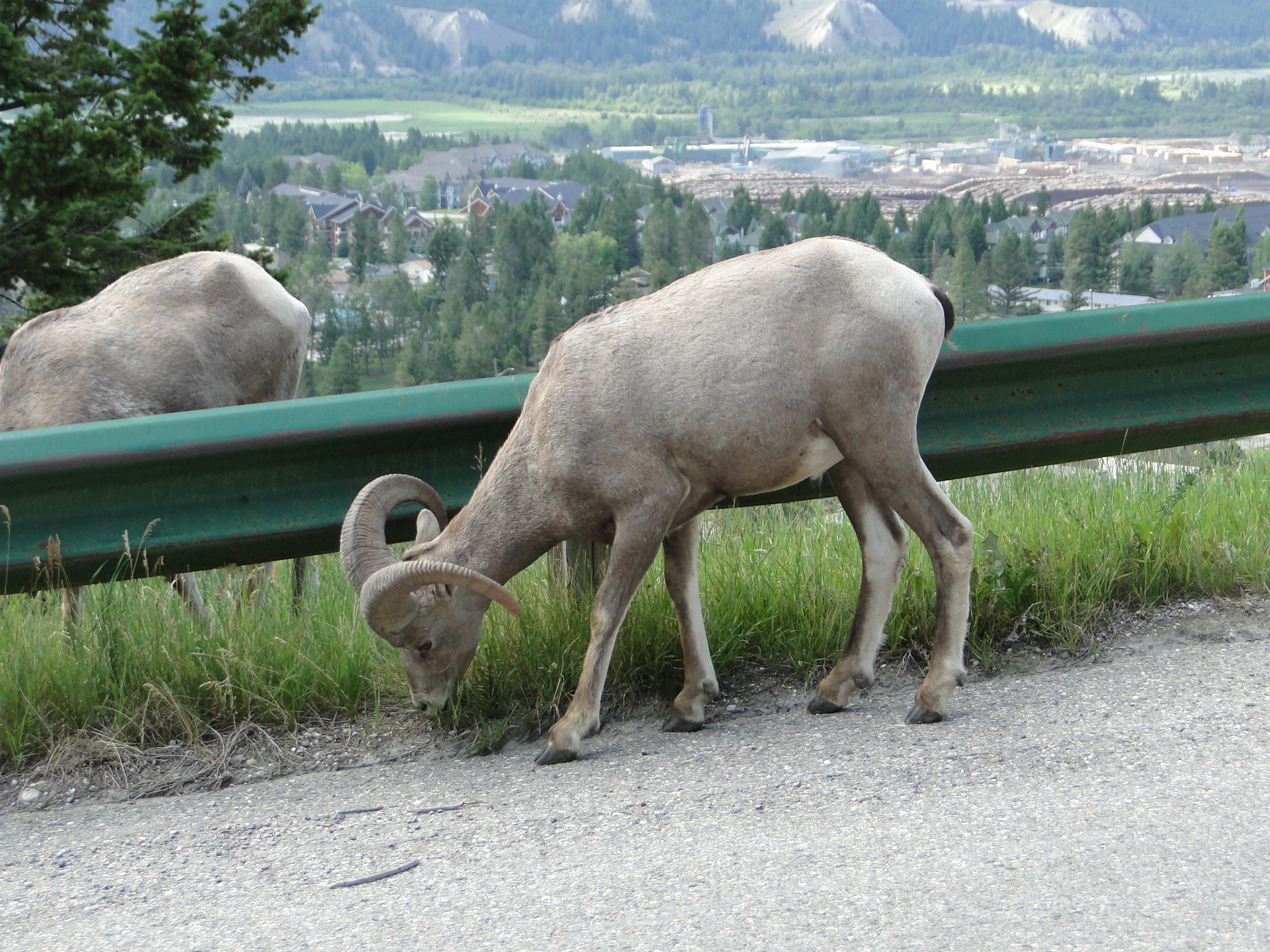
Our first overnight stop was the southern entrance to the Kootenay National Park at the town of Radium Hot Springs, British Columbia. This town and the surrounding area are quite popular with vacationing Canadians for its hot springs, rivers, mountains and golf courses. The National Park site that we chose, Redstreak Campground is located on the side of a mountain high above the town. As we drove into the park, we were immediately greeted by a small family of Bighorn Sheep.
The all dry campsites at this park (no power, water, sewer) are rather close to one another, but most have shade, are fairly level and have close access to very clean bathrooms and potable water. ($43/night Canadian – very good exchange rate at the moment) There is also a dump station for RV’s. There are hiking trails surrounding the campground, including one to a commercial hot spring (fees), and one very steep trail down the mountain into the town. The site was also a very active location for mosquitoes and insect repellent was a necessity.
From Kootenay we traveled a short distance (150 miles) to the adjacent, Yoho National Park and camped at the Kicking Horse Campground, named from the Kicking Horse River, derived allegedly in 1858 when explorer James Hector reported being kicked by his packhorse while exploring the river. With two nights scheduled at Kicking Horse ($37/night Canadian) we were able to have 1 1/2 days to explore the region.
Note: Many of our camping sites are just for one night, essentially a spot to sleep as we tour but also a reasonable driving distance from our previous stay. We are still trying to make time towards the Alaskan adventures and each stop is not necessarily to be fully explored.
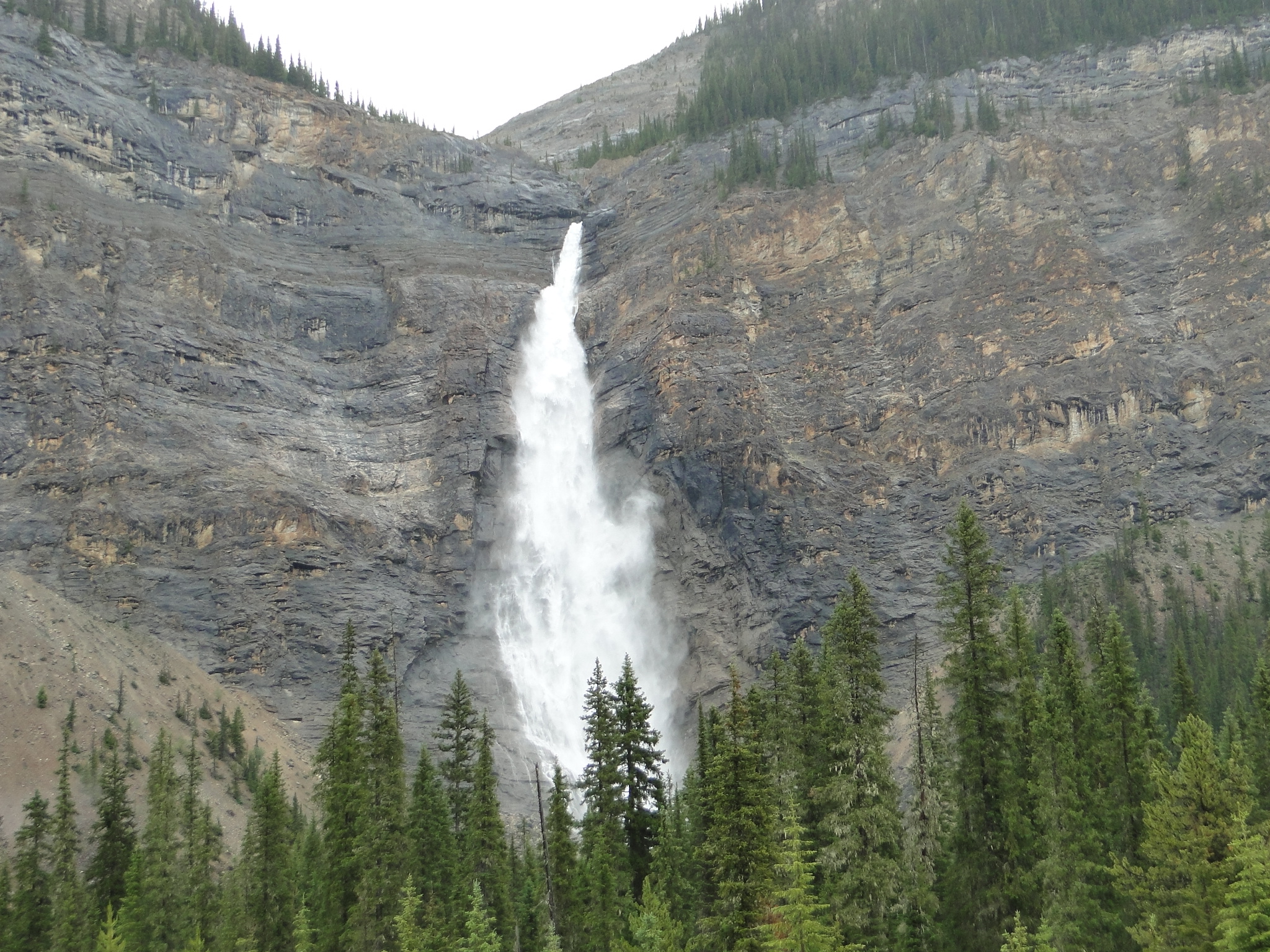
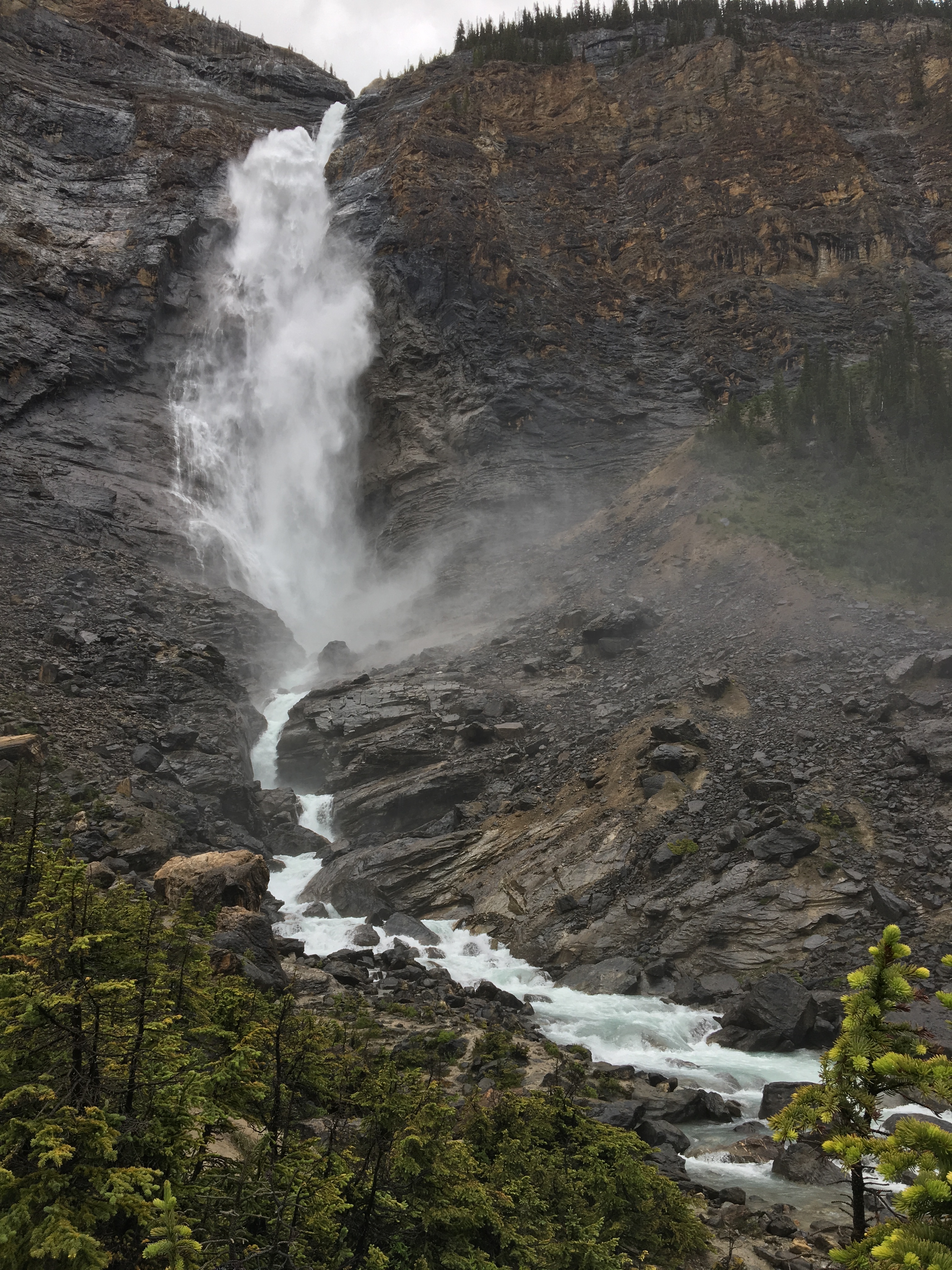
Yoho is an extremely dramatic landscape. Even the camp site is surrounded by towering spires and sharp, jagged mountain lines. Just 5 Km from the site is one of the tallest falls in Canada, the magnificent Takakkaw Falls, falling some 1260 feet in total. The road to the falls was an adventure of its own as it has several hair-pin turns that do not truly work for any vehicle longer than 20 feet. Our RV is 26’. However, there are no driving prohibitions and in fact we were instructed by a park information officer on how to back up at the one particularly sharp turn in order to make a successful maneuver. At the Visitor’s Center they actually have a toy bus that they use to demonstrate this driving technique on top of a laminated map! Despite the drama at these turns, the falls rewarded our effort. There are several vantage points that are easily walkable as well as a trail that leads behind the falls. As the water cascades, it bounces off the upper rocks, thereby casting a wide spray that when combined with the wind, can soak even the most cautious visitor.
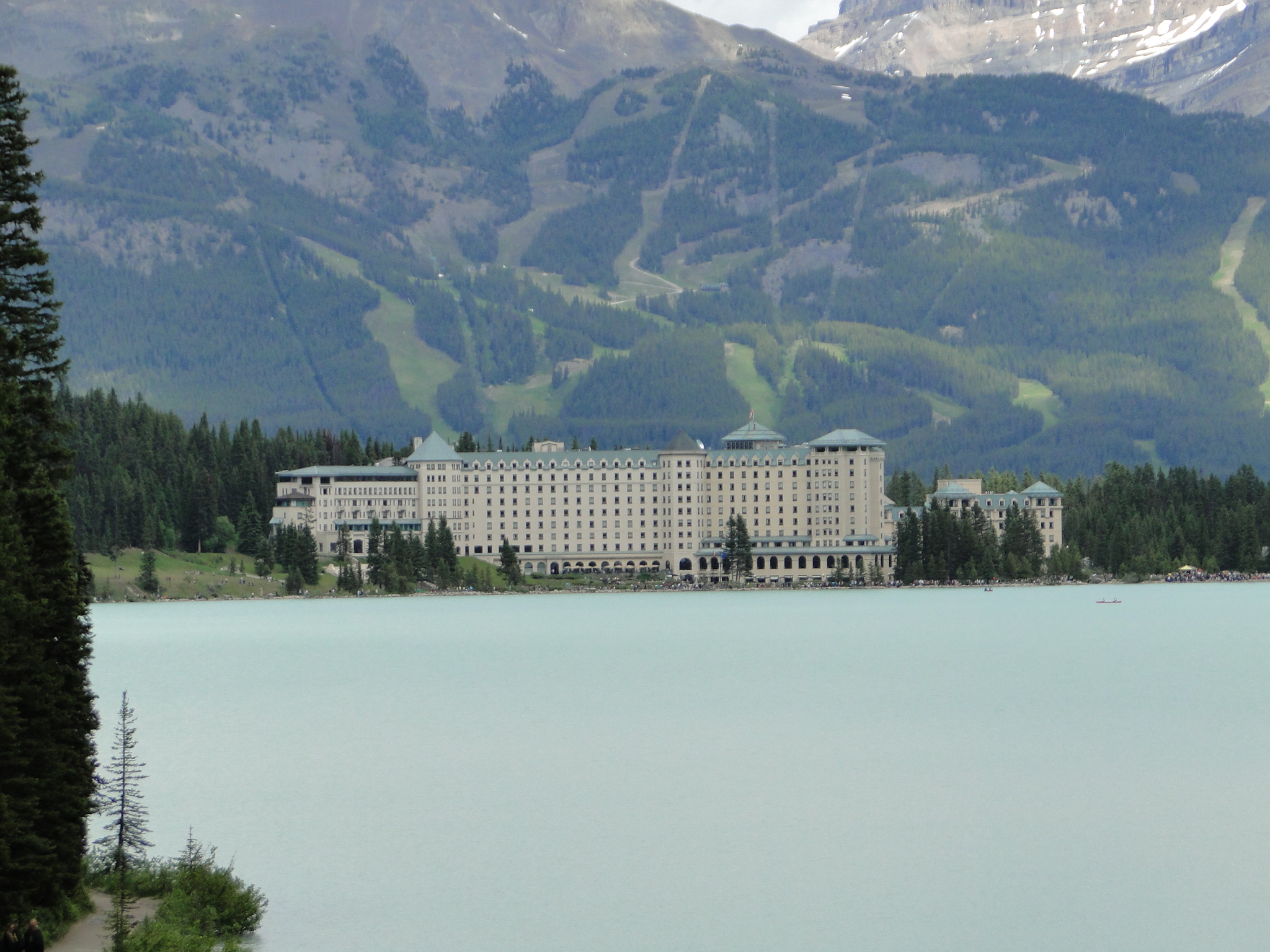
The main attraction in this region though is the famous Lake Louise and the Fairmont Chateau. You are fair warned by virtually everyone that you encounter that you must get to Lake Louise early in the morning or late in the afternoon due to traffic and crowds of tourists. (Admittedly, 44 years ago on our last visit, it was not as crowded) We were also told that unless you get up the mountain road to the lake early, you will need to take the shuttle bus. ($4/pp or $2/Sr.) We got to the shuttle parking lot at 10:35 a.m. and waited in line for exactly 2 hours. They only accept credit cards, had only two people working the booth, and the machines processing the cards were running very slowly due to poor internet connection. The moral of this story is to get to the shuttle very early in the a.m. Although many people tired of the wait, especially with young children, and left the queue, we chose to wait it out and eventually arrived at the lake by about 1 p.m. It was as beautiful as we remembered, though the crowds definitely dimmed a bit of the luster. To get away from the throngs, one must hike either around the lake or to several of the trails that lead you higher into the mountains towards the glacial fields and to one of the two European style Tea Houses – Lake Agnes (6.8 km round trip) or Plain of Six Glaciers (10.6 km rt). We chose the Lakeshore Trail, a 4 km mild hike that offers glorious views of the glaciers above, the shimmering lake and of course the elegant Fairmont Chateau Lake Louise. This iconic hotel is a year- round luxury resort that offers guided mountain tours, world class skiing in the winter, scenic hiking, canoeing, a luxury spa and first- class dining.The original chalet was built in 1890 and has undergone many restorations, a fire in 1893 and again in 1924 and has had several additions constructed. There are accommodations for approximately 1500 guests in addition to the nearby staff accommodations that house 650.
Lake Louise itself was named for Princess Louise Caroline Alberta in 1884, who was the wife of the Marquis de Lorne, the Governor General of Canada. She was also the 4th daughter of Queen Victoria and the namesake of Alberta Province.
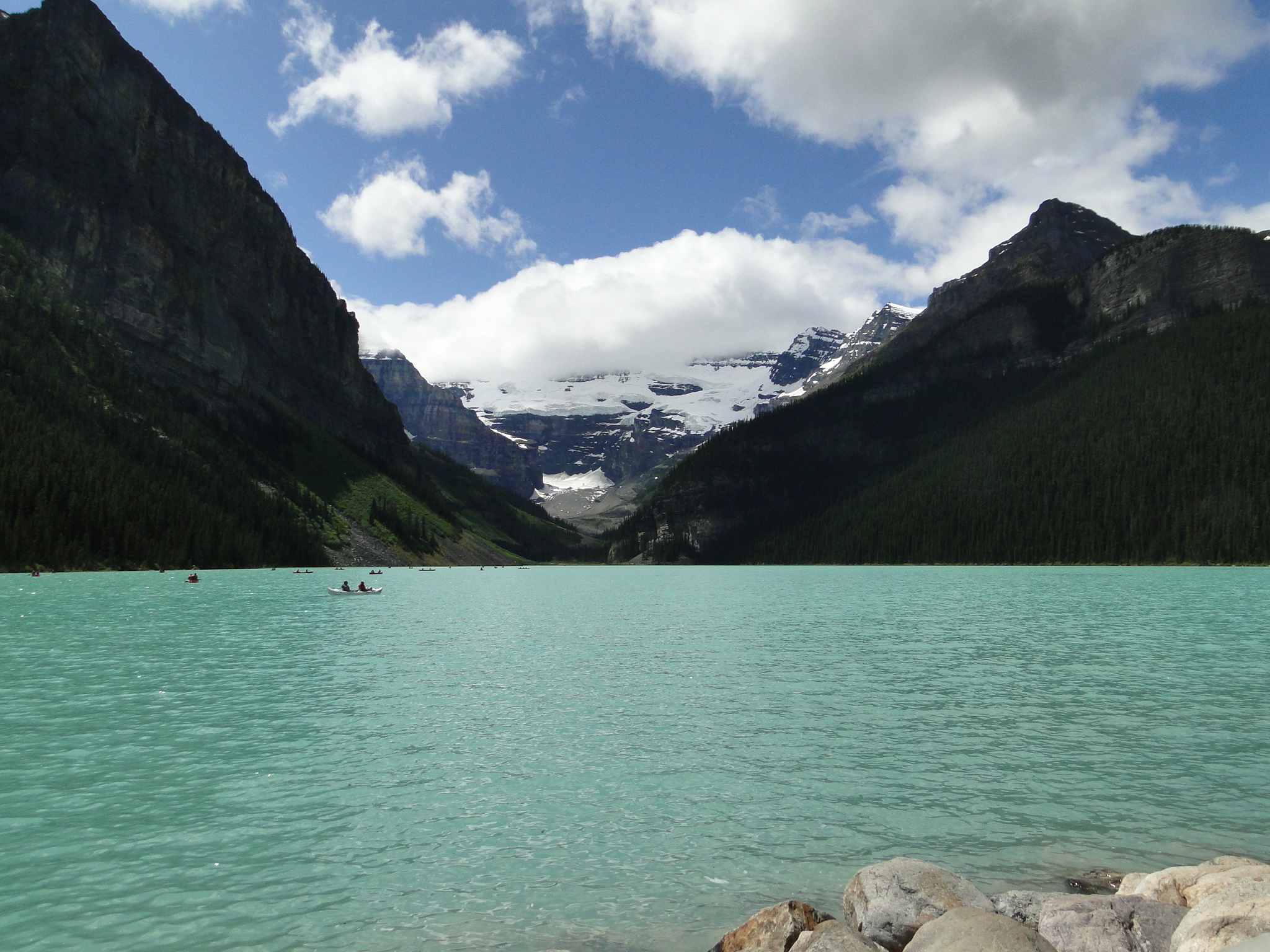
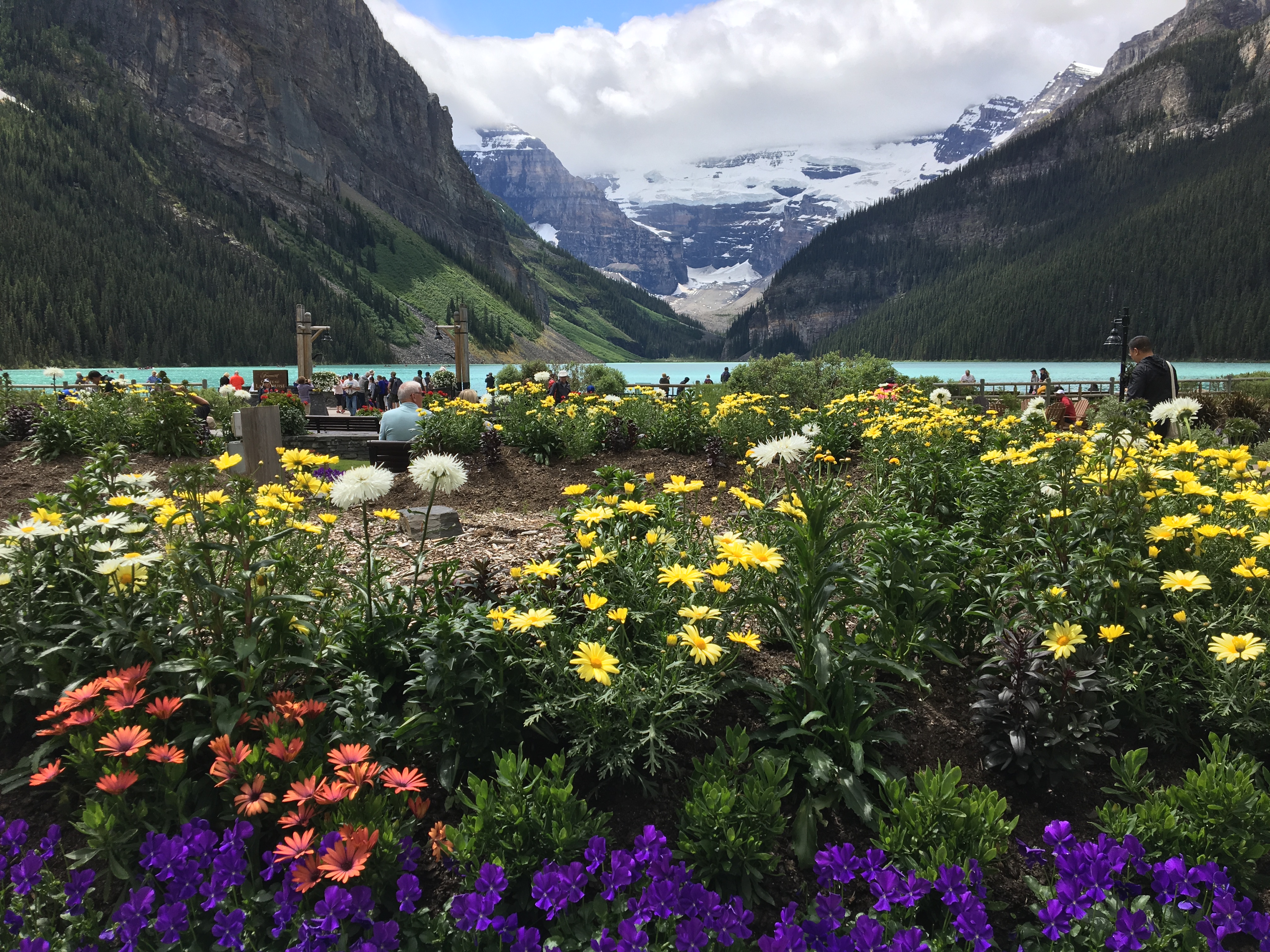
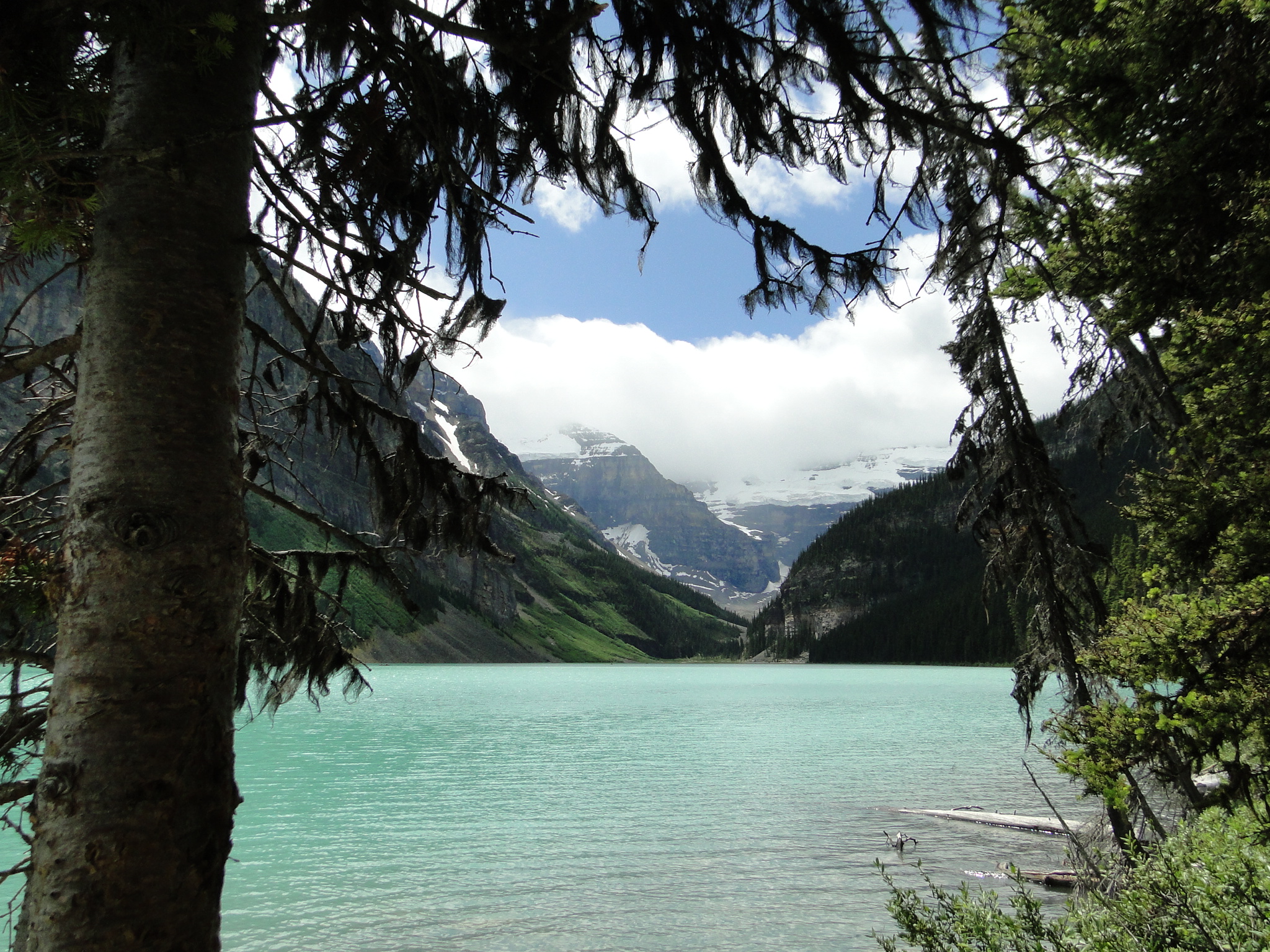
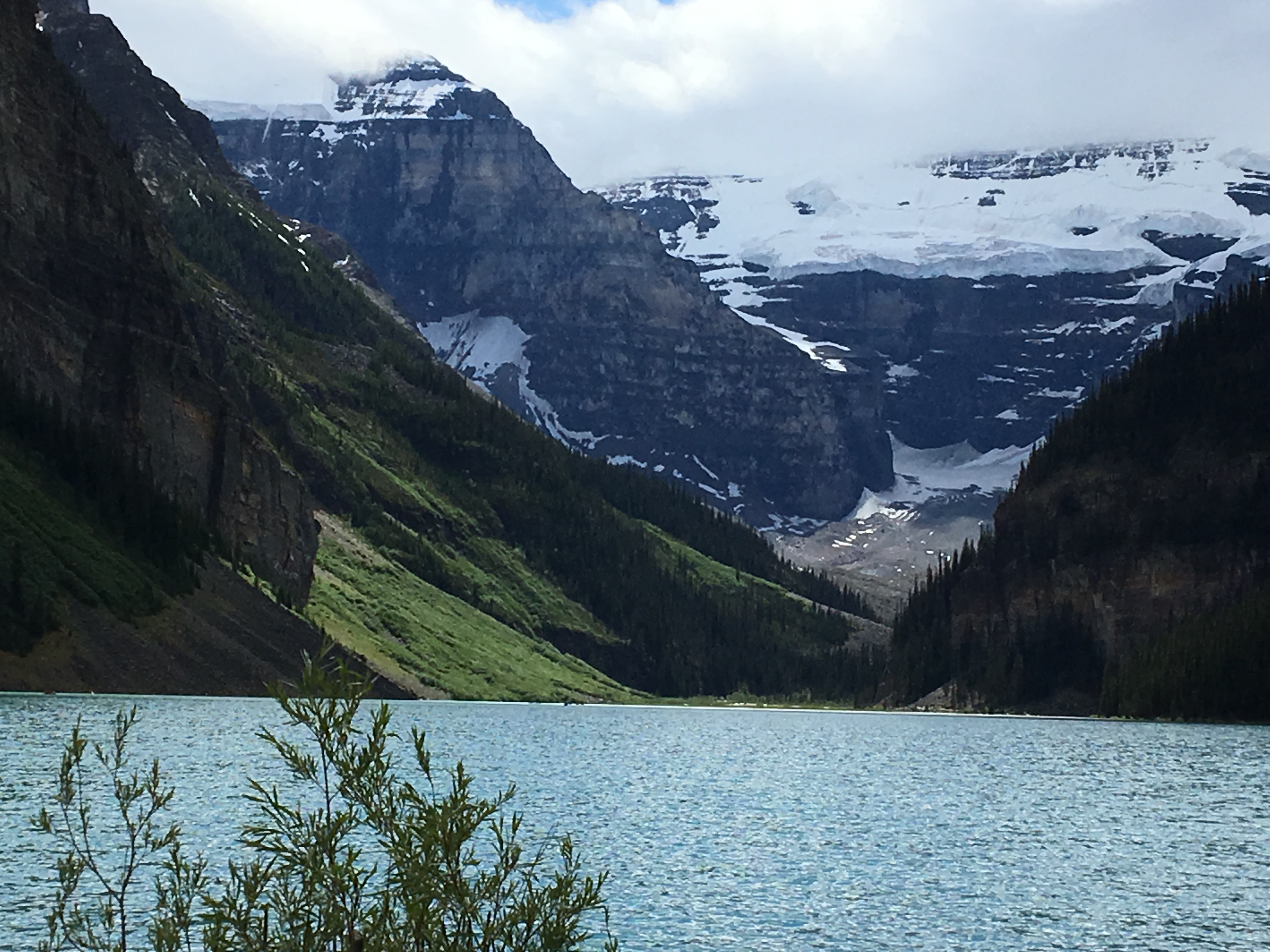
After a couple of hours hiking at the lake, we returned via the shuttle bus to our RV with plans to return to Lake Moraine in our own vehicle later that afternoon. Lake Moraine is another glacial lake on the mountain adjacent to Lake Louise. Another shuttle bus serves this lake (with long lines for tickets as well) but after 7 p.m. you can drive directly to the lake. That is what we chose to do and we were rewarded with another even more vivid blue glacial lake. The colors of glacial melt are hard to describe and photos look as though they’ve been somewhat doctored. This color; however, is derived from the rocks grinding underneath the surface of the glacier, emitting a silt called rock flour that stays suspended in the lake water for quite a long time. The sunlight that reflects off this rock flour is what gives the lake the turquoise blue or almost green color.
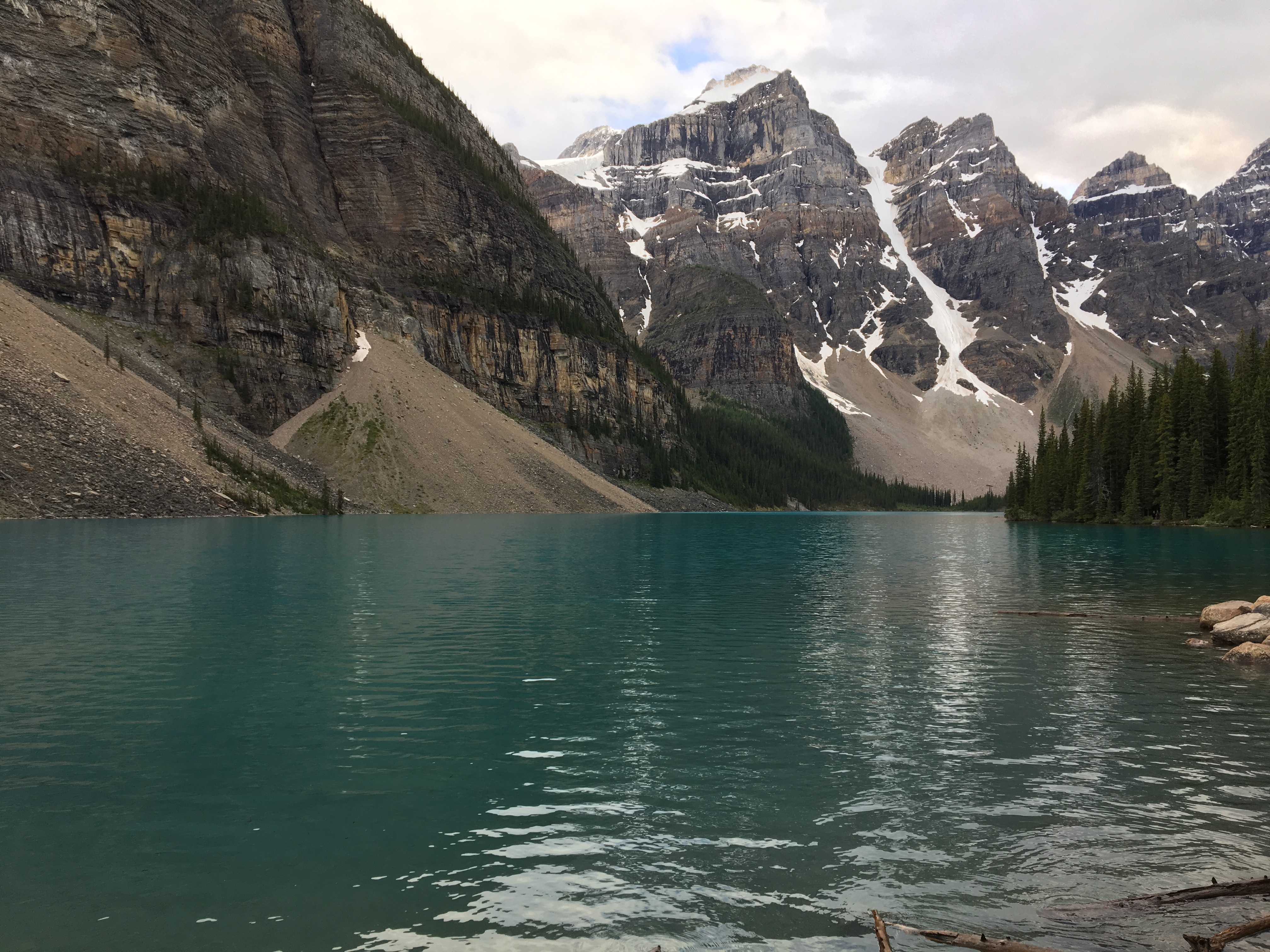
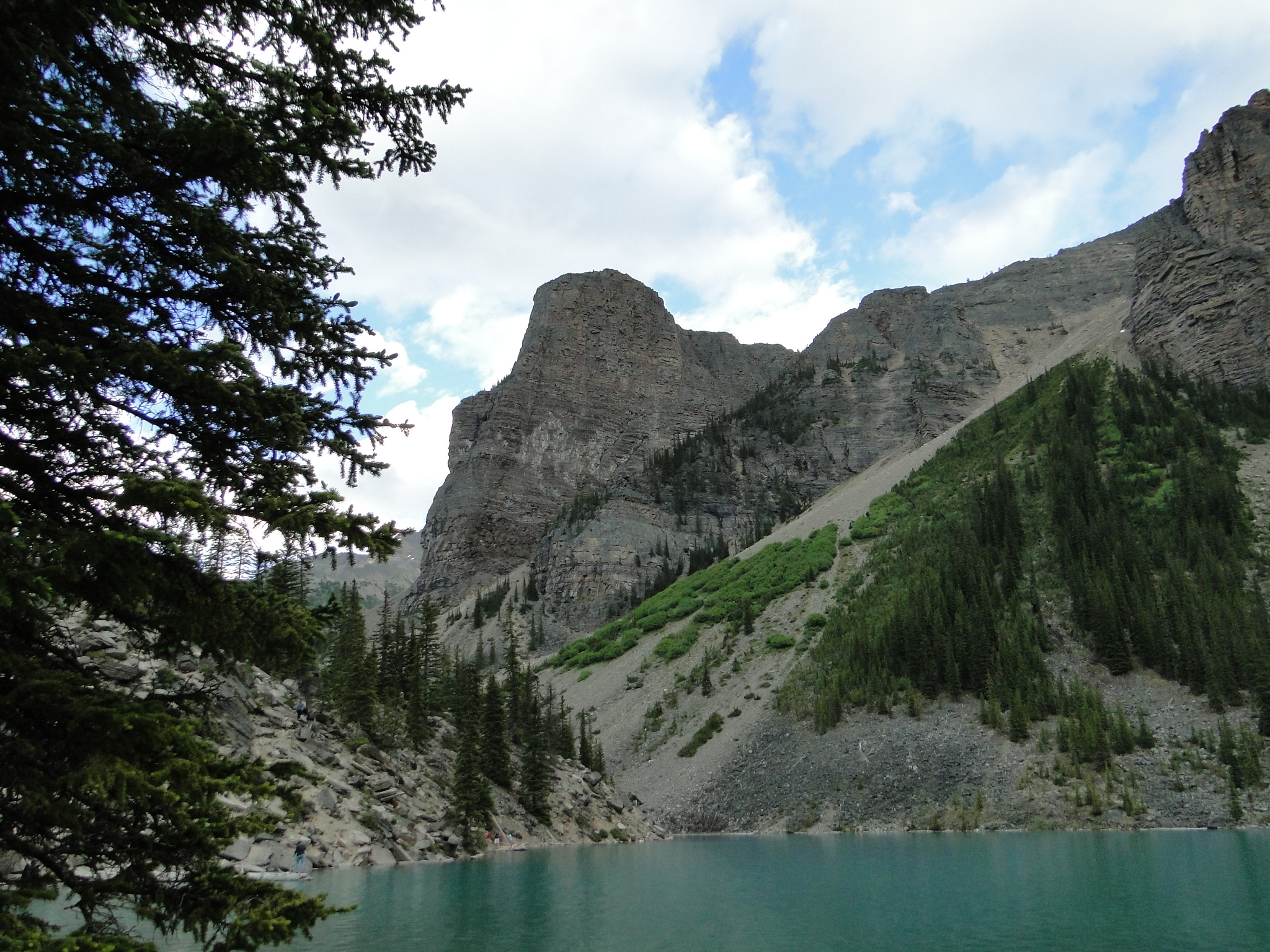
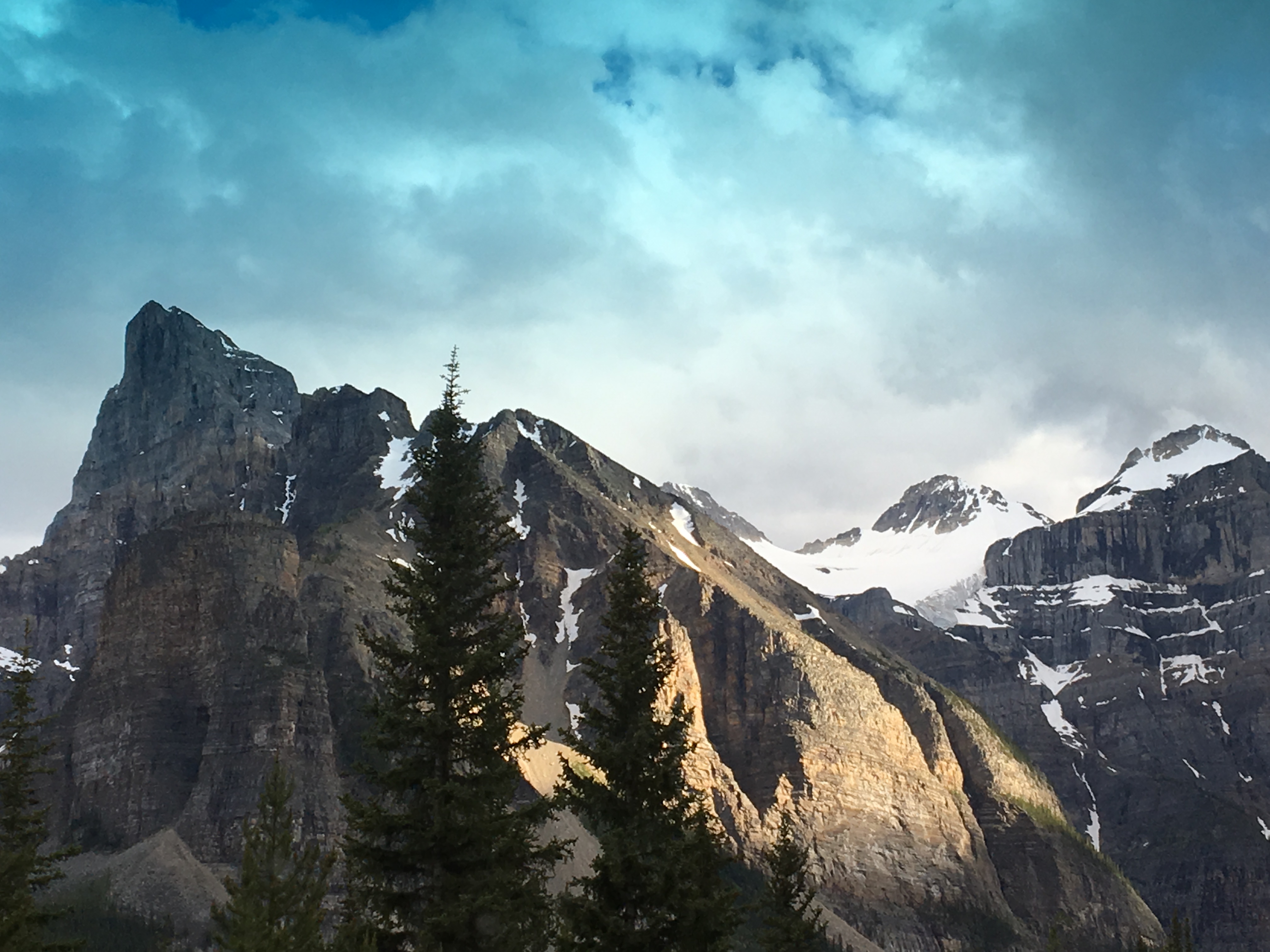
After another beautiful night at the Yoho National Park, we departed for the Ice Fields Parkway, the park road that leads from Lake Louise to Jasper. (There is a $10/pp fee for being in the park per day, whether camping or just visiting for the day. The toll booth at the Ice Fields Parkway also collects this fee.)
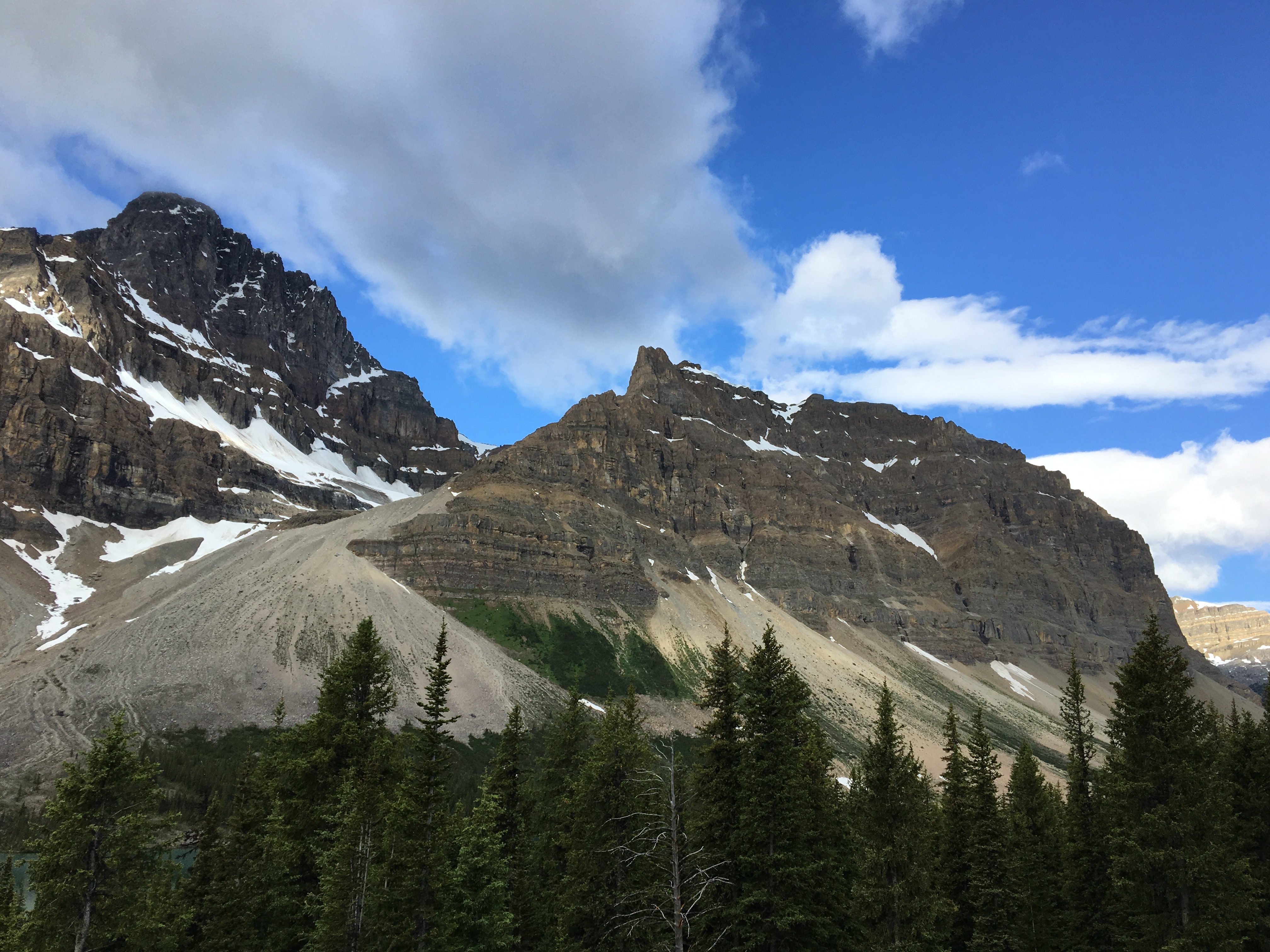
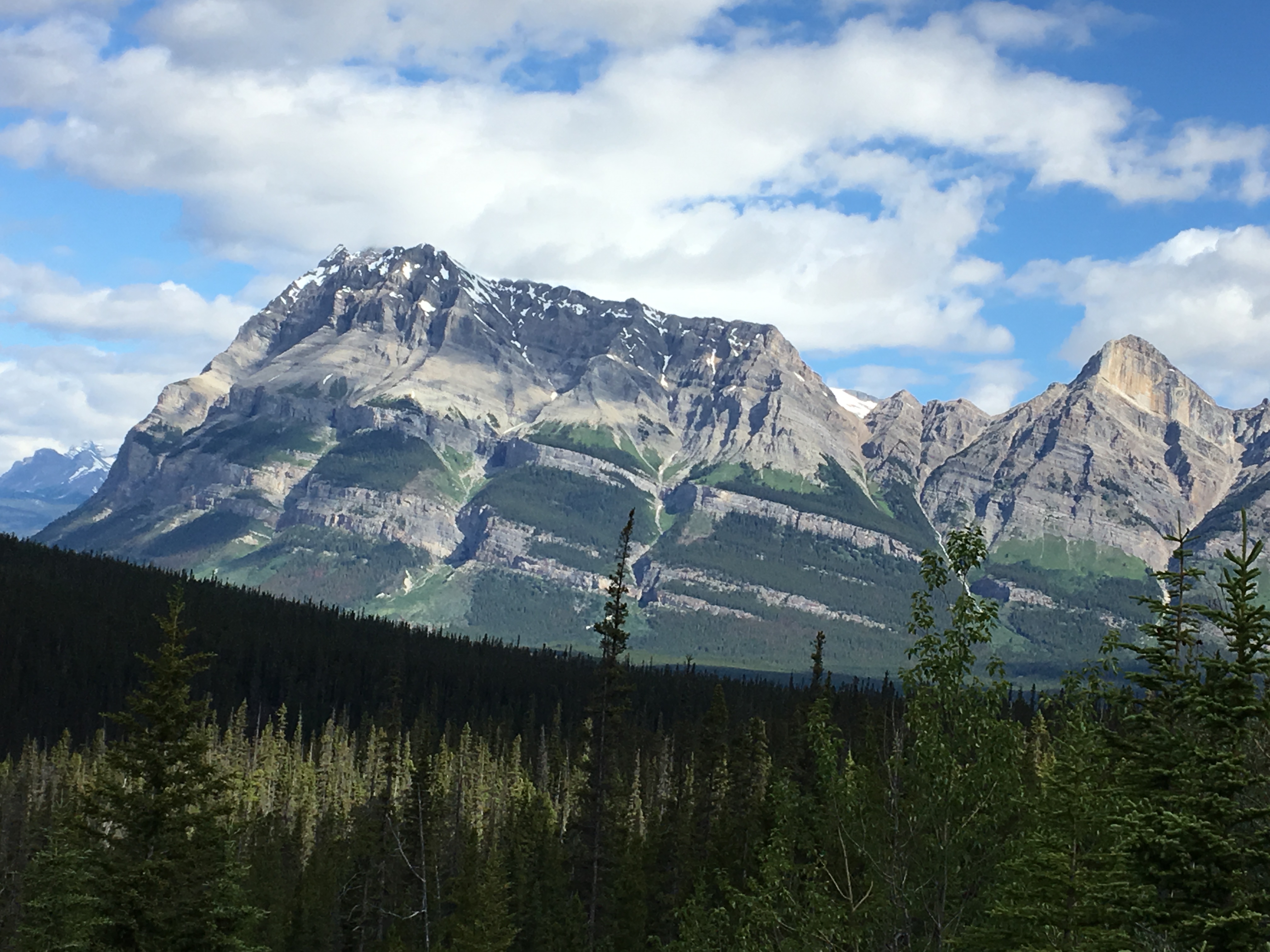
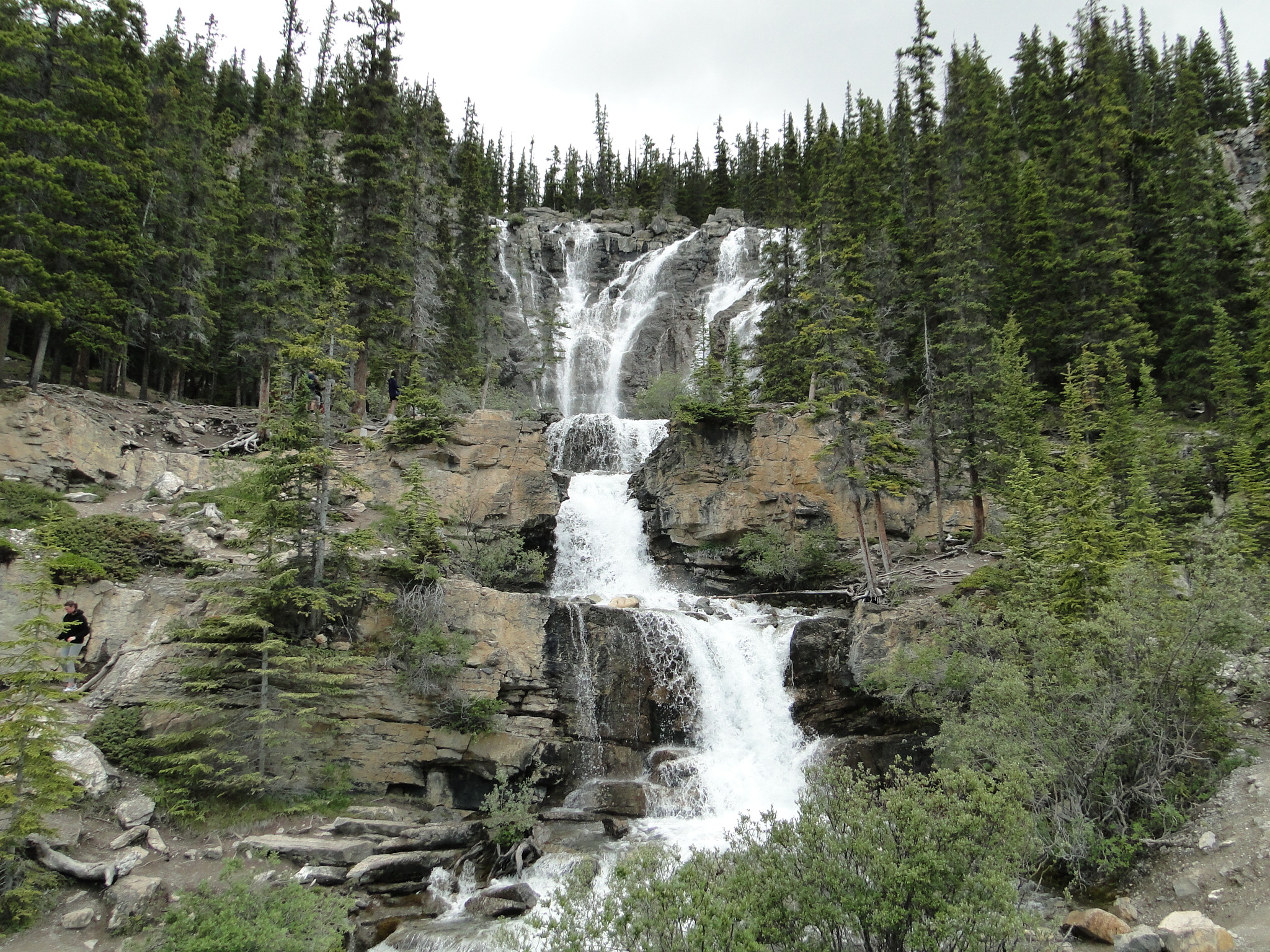
The world -renowned Ice Fields Parkway, one of the most beautiful journeys on the planet, is a 230 km drive that winds through a spectacular sweeping valley of dramatic glaciers, rock spires, cascading waterfalls, glistening blue lakes, and a thick pine and larch forest. There are hiking trails, both long and short, waterfalls, overlooks and more than 100 ancient glaciers.
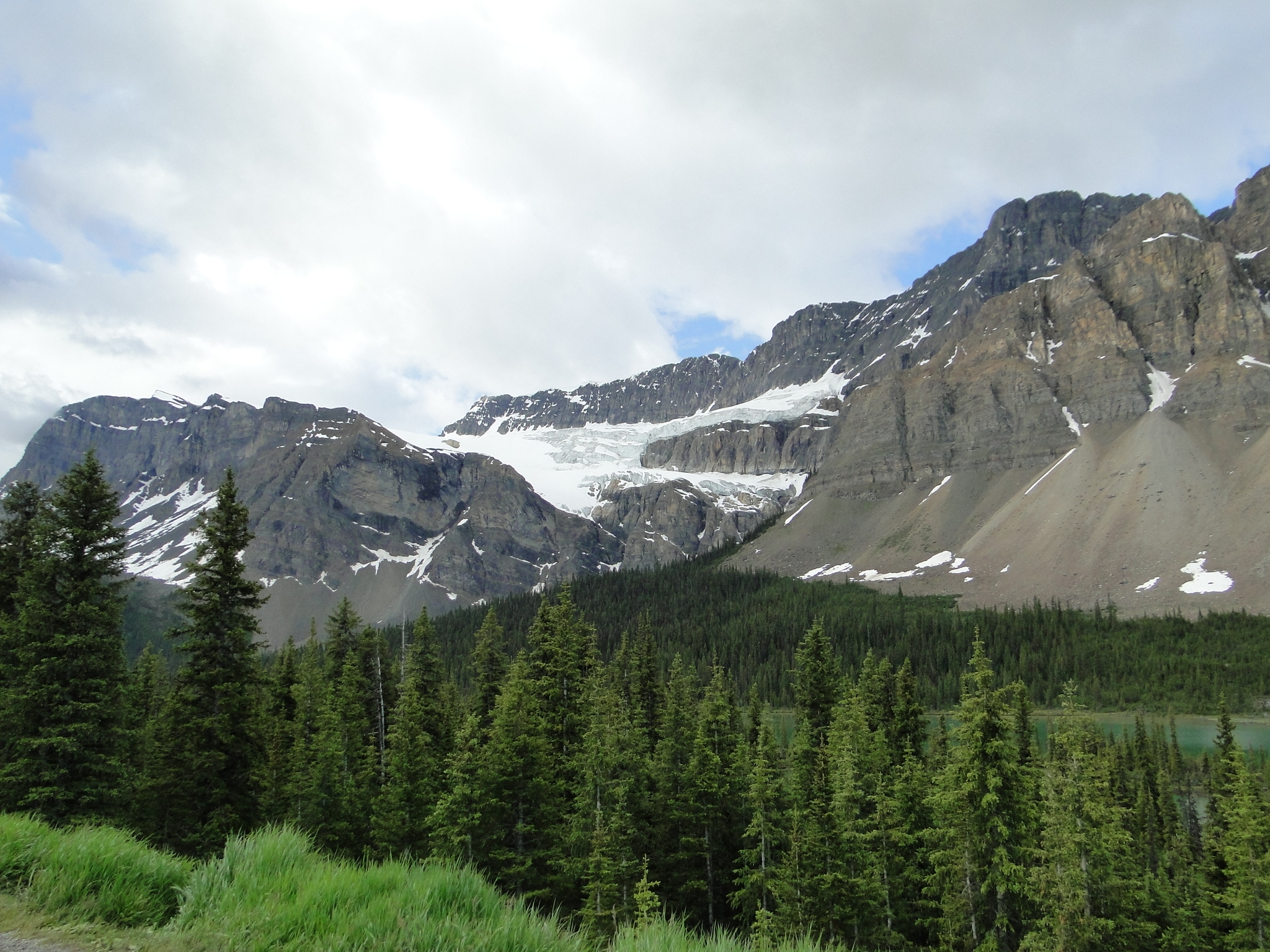
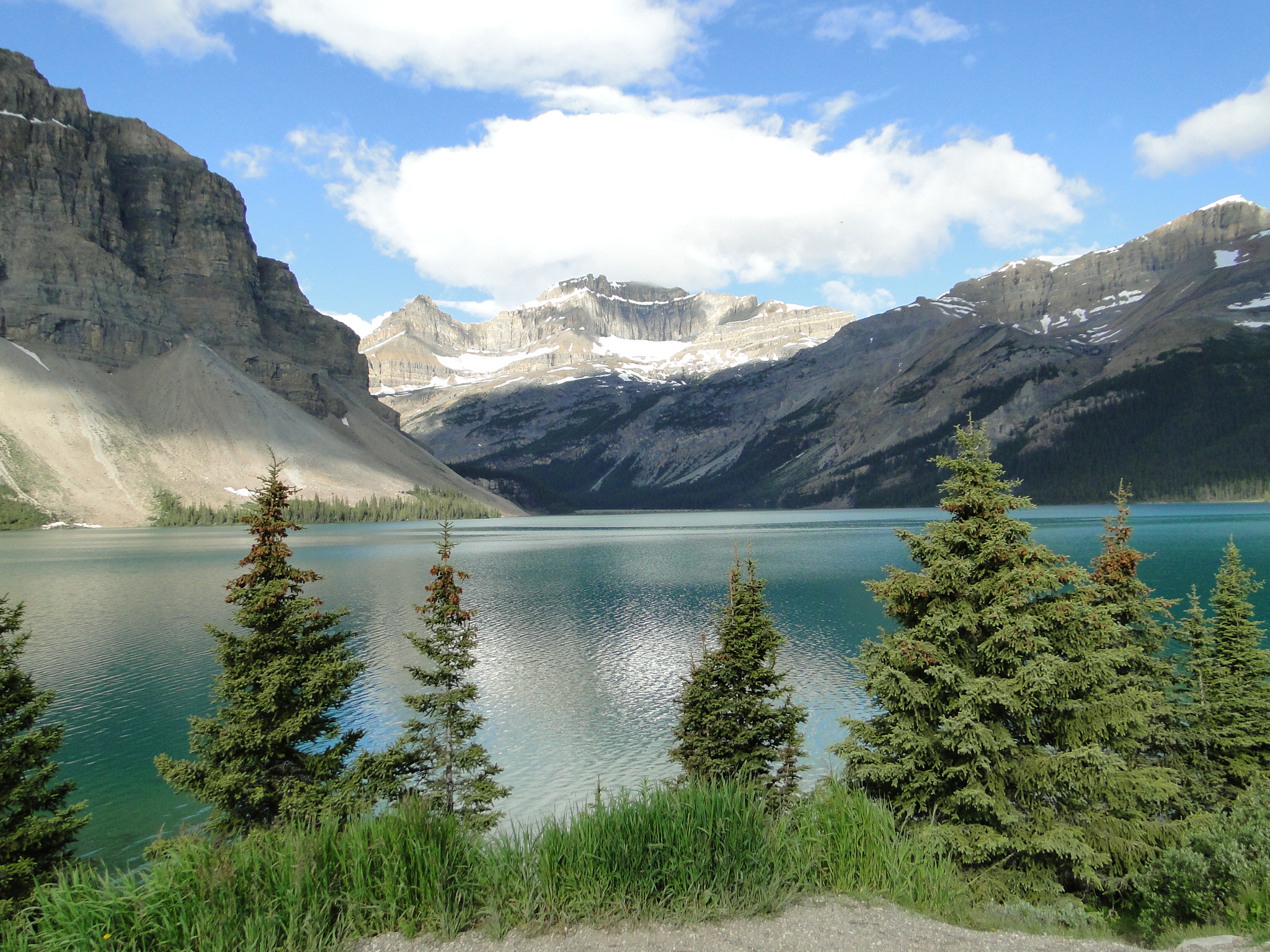
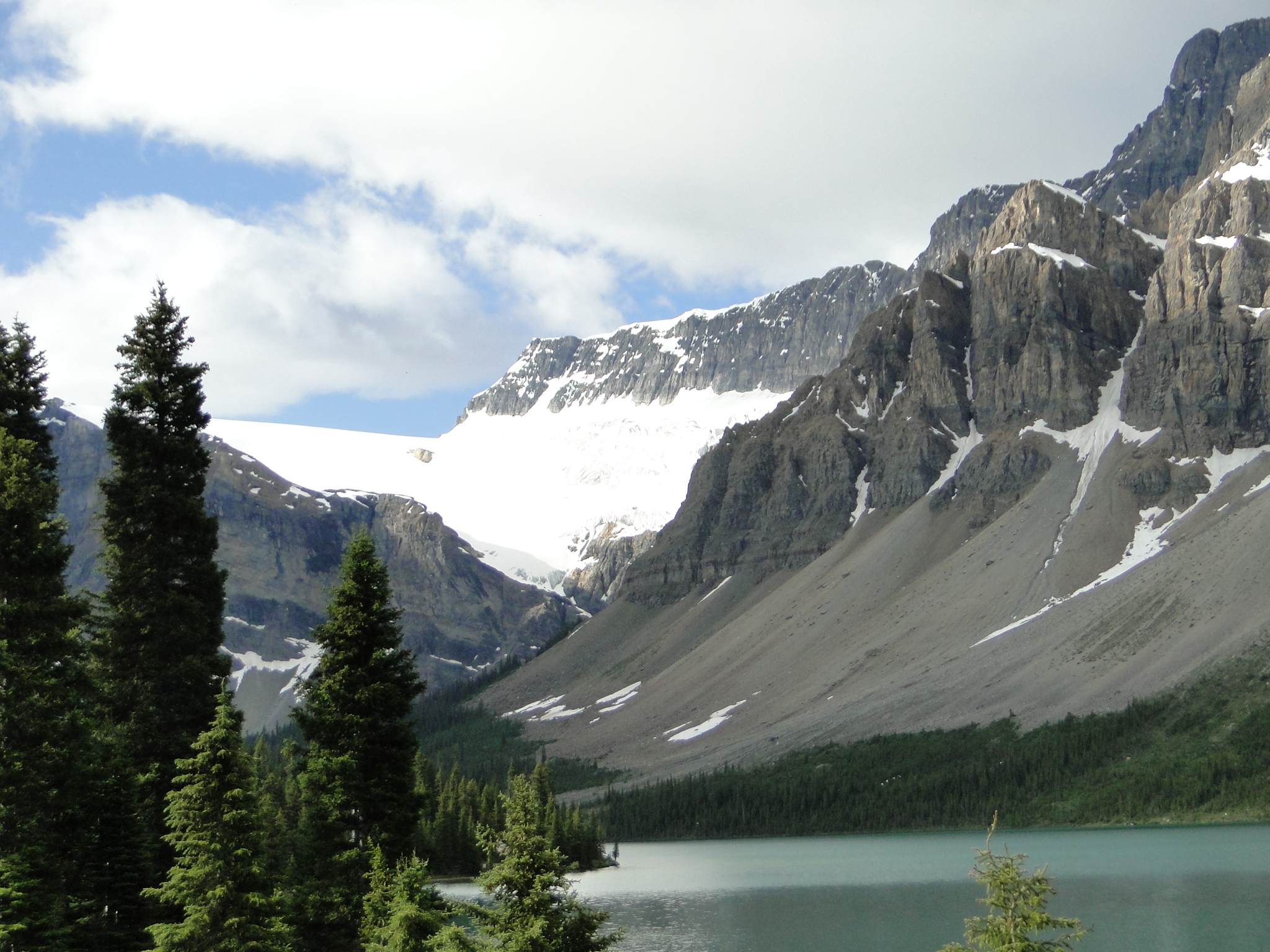
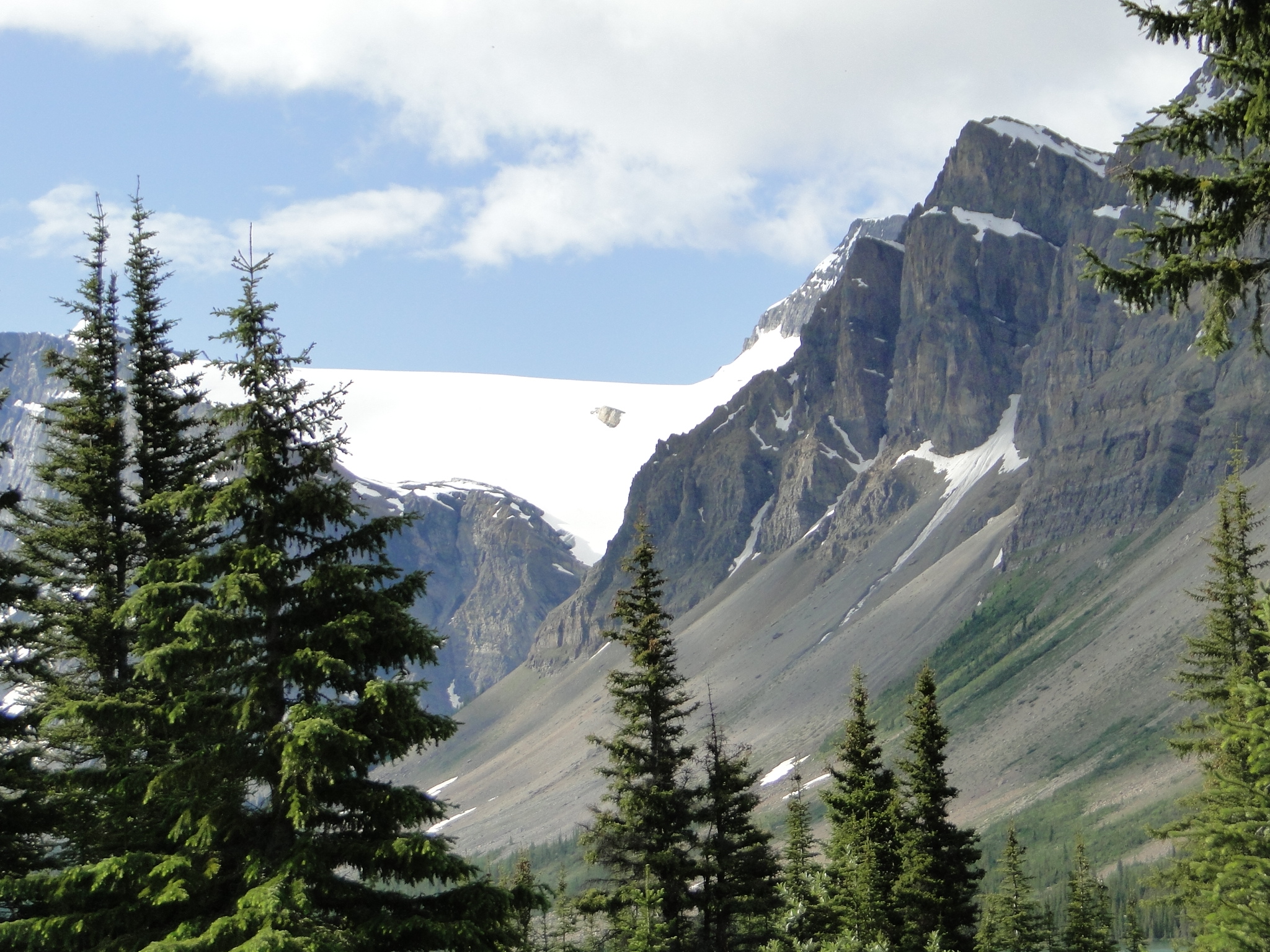
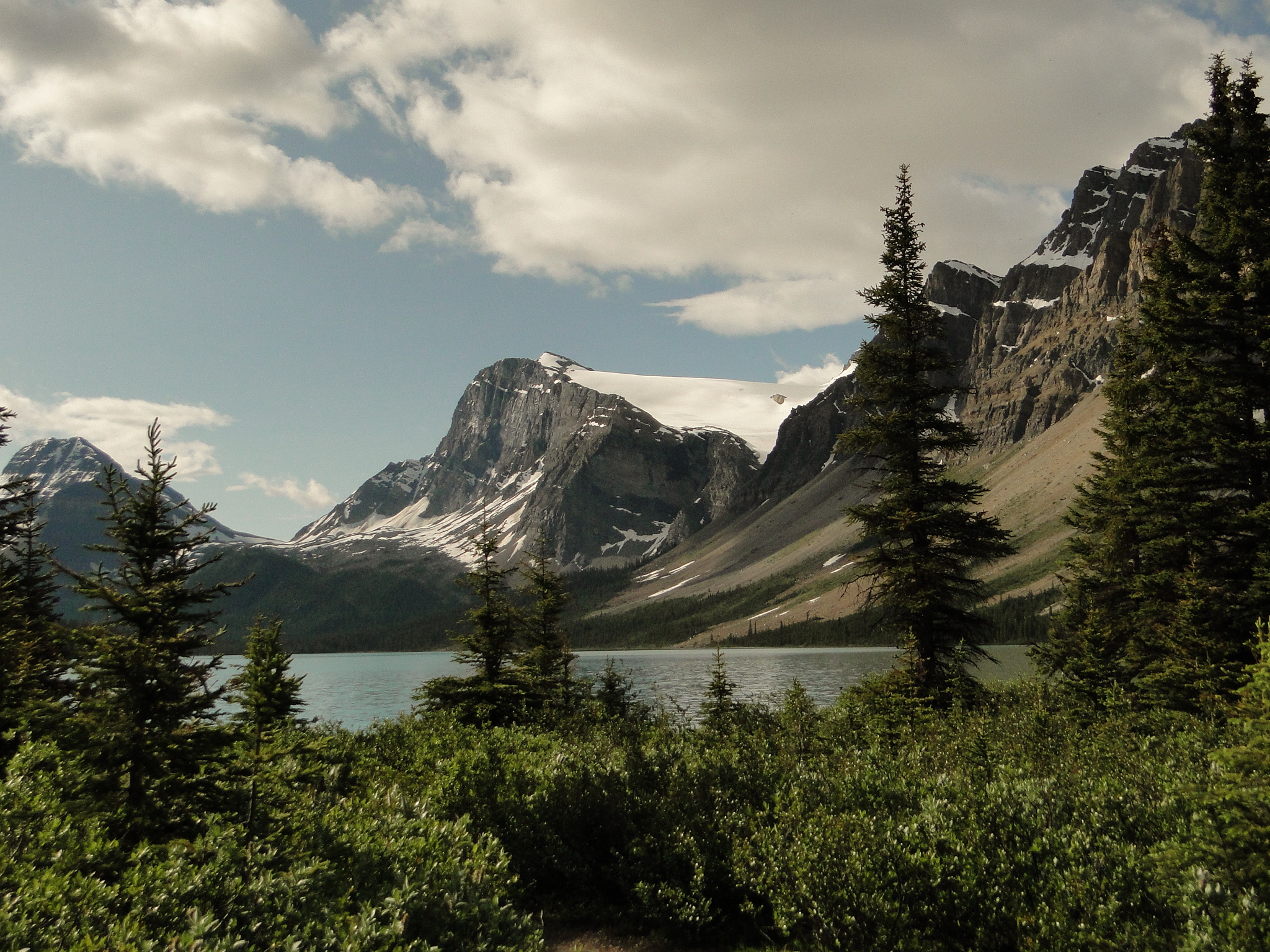
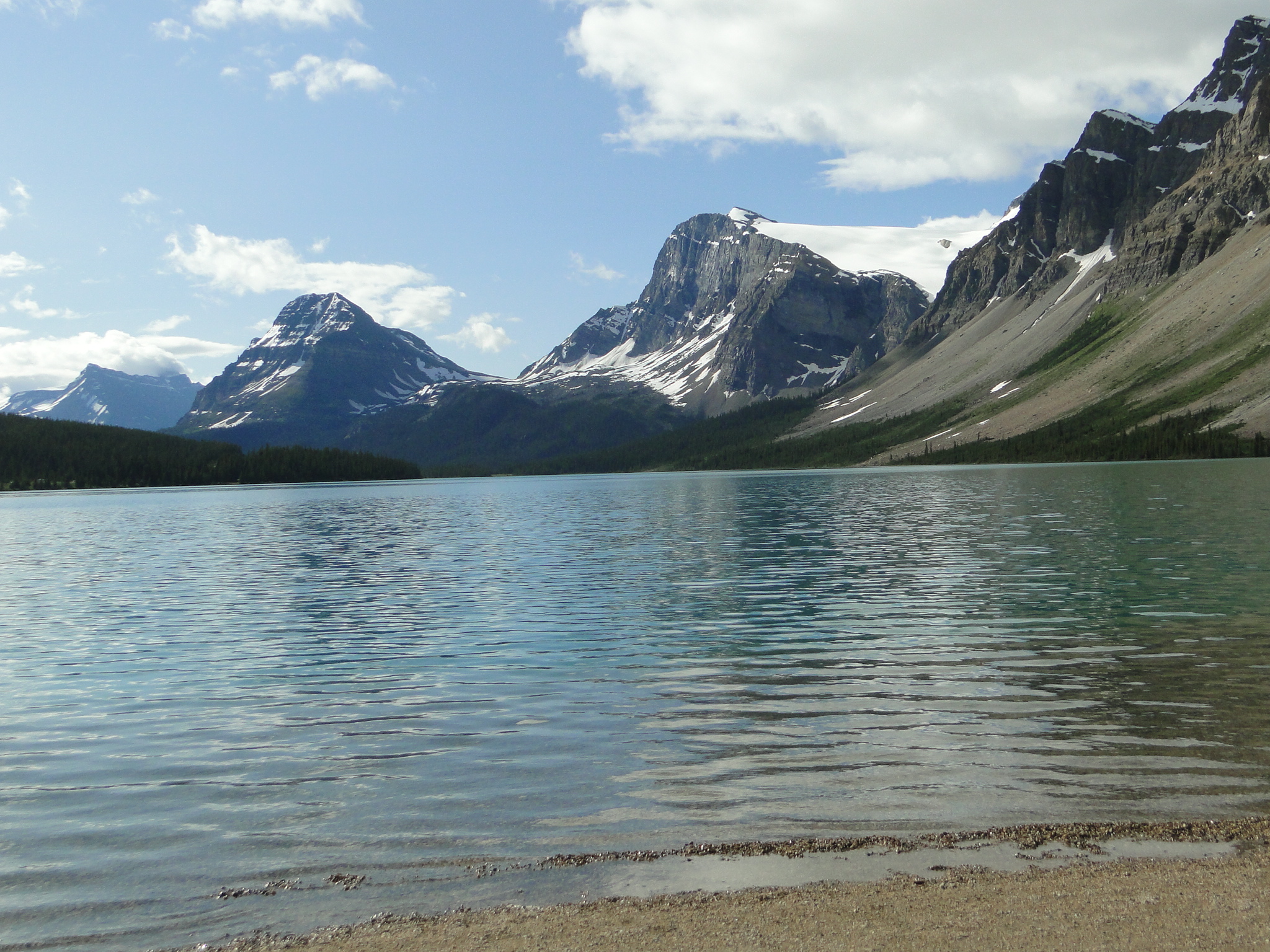
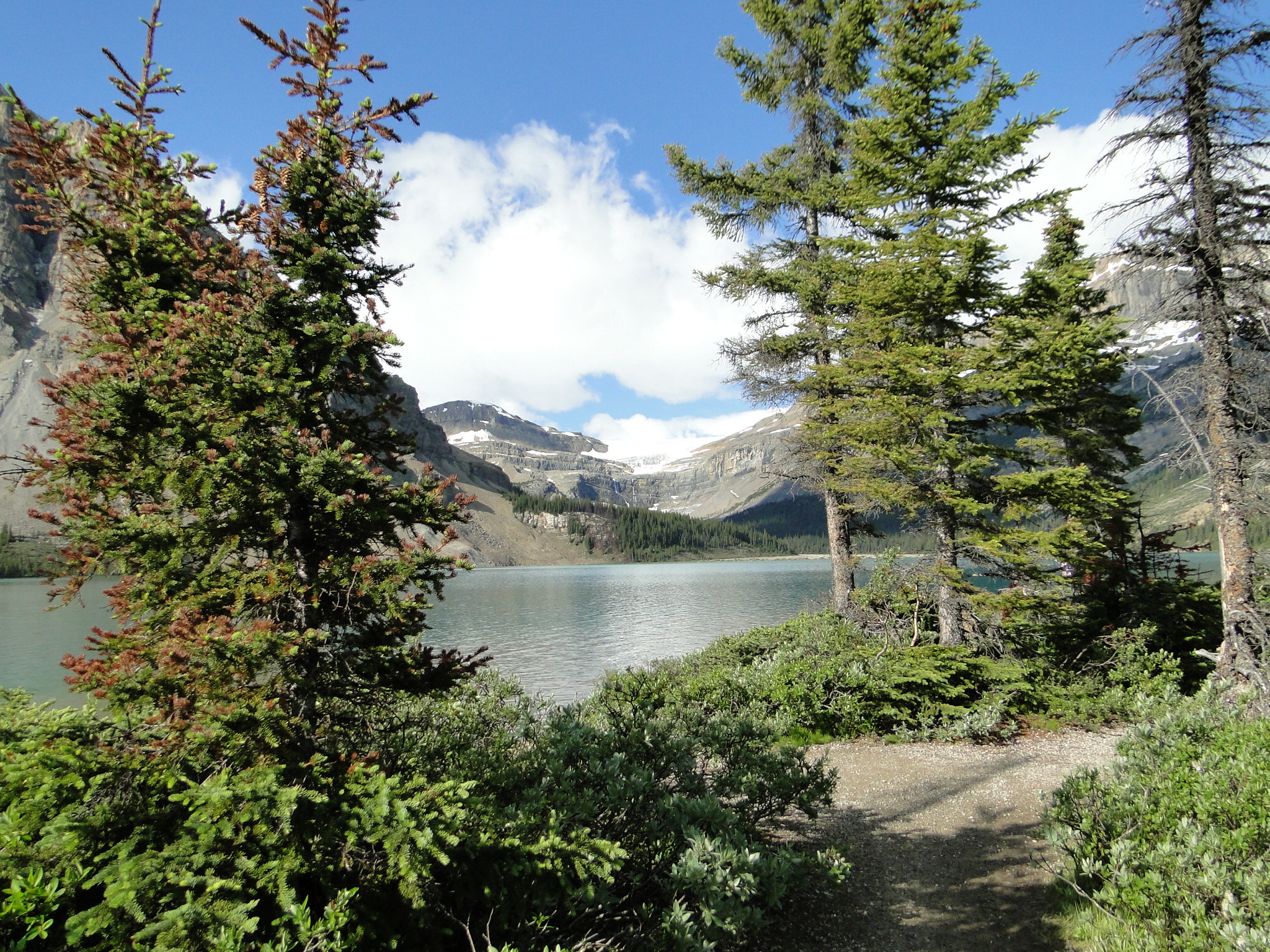
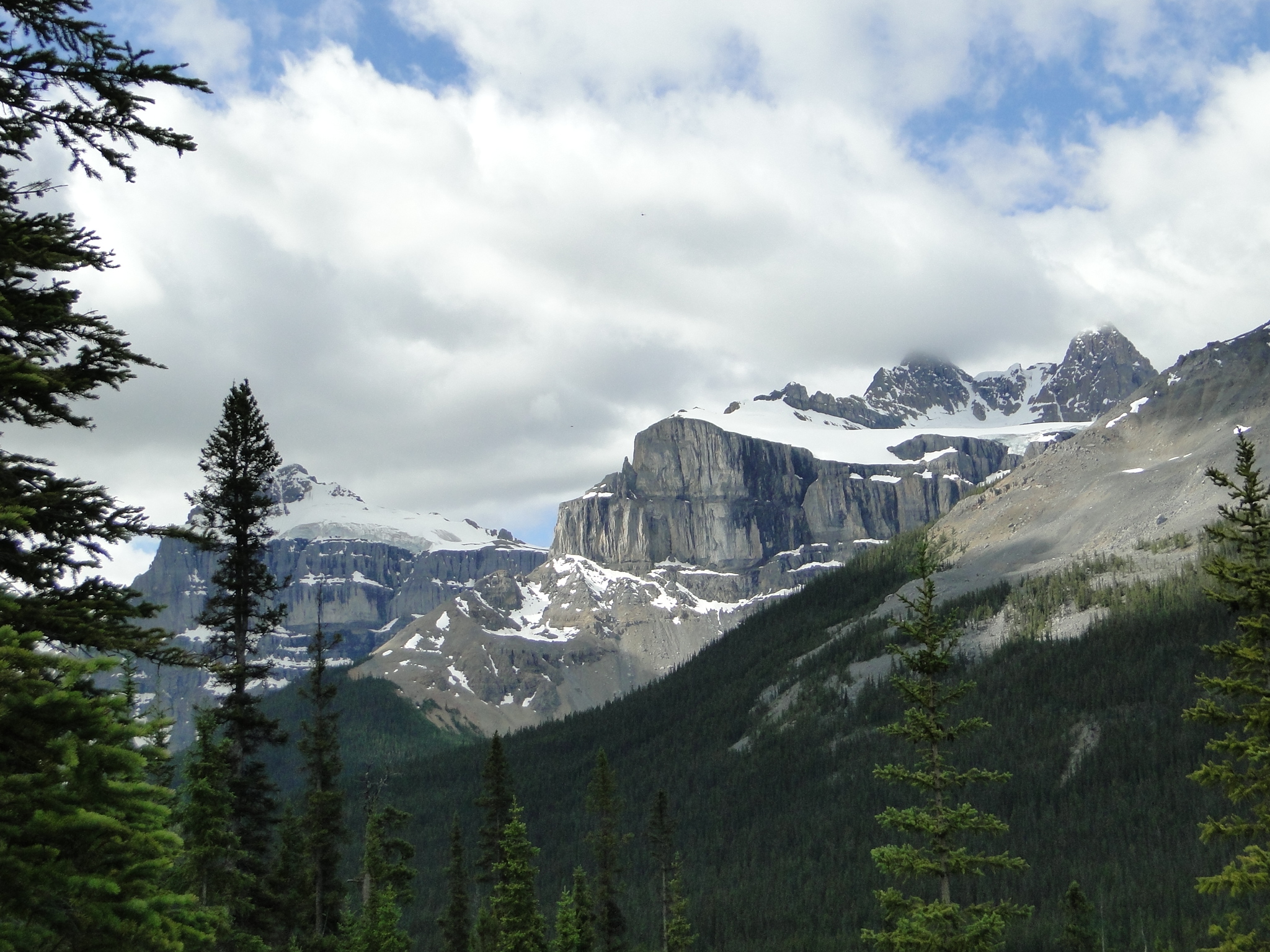
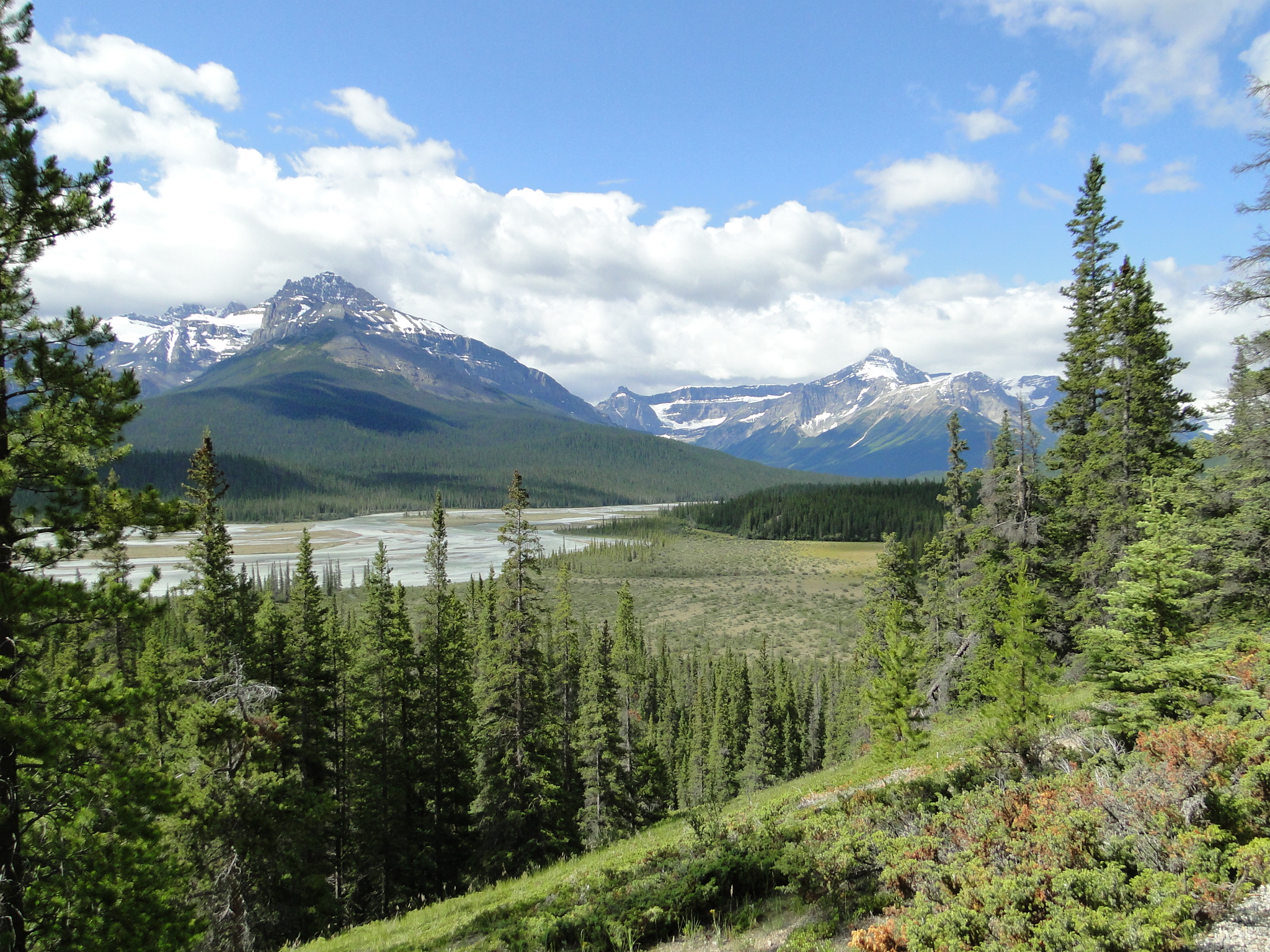
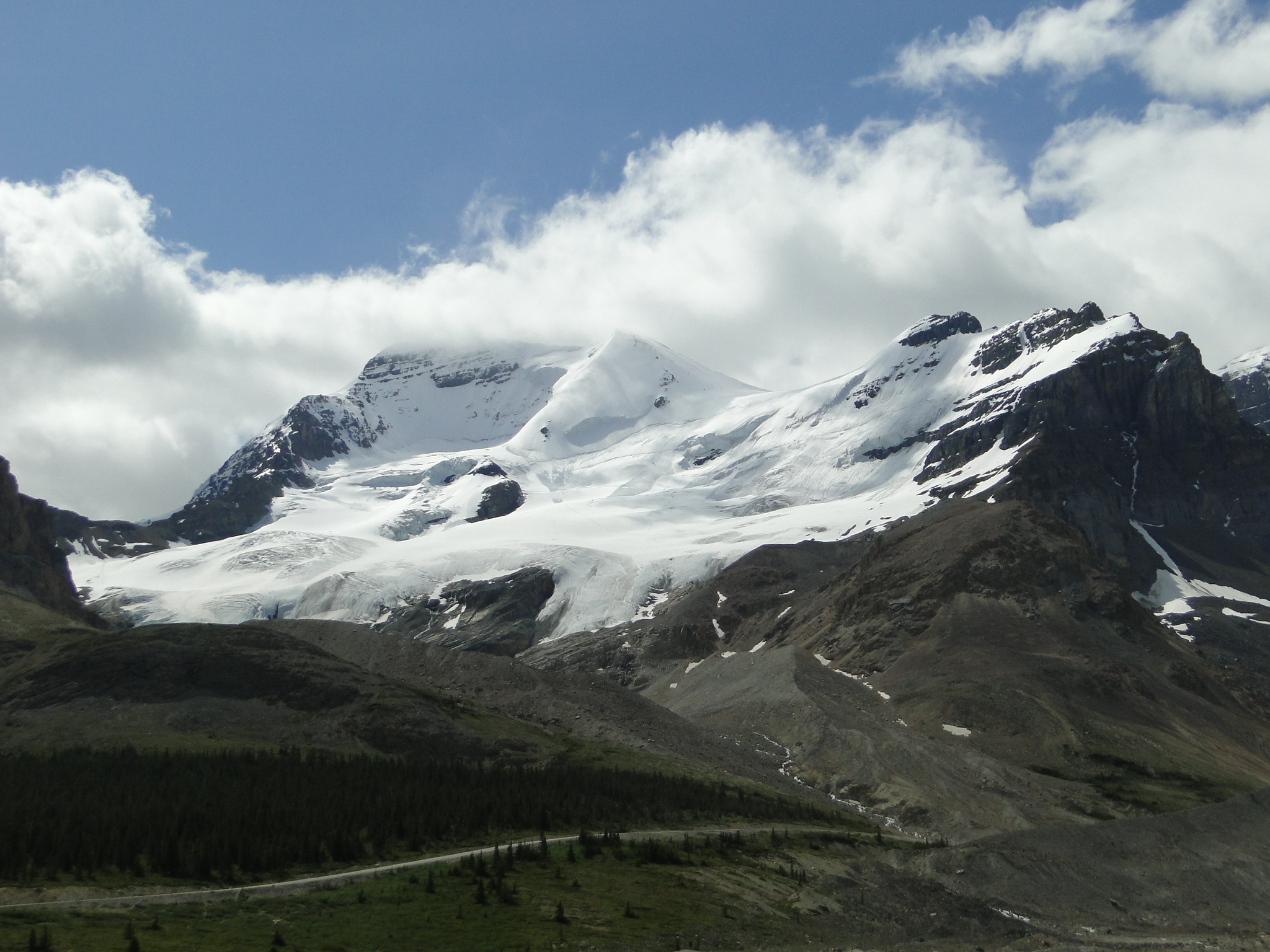
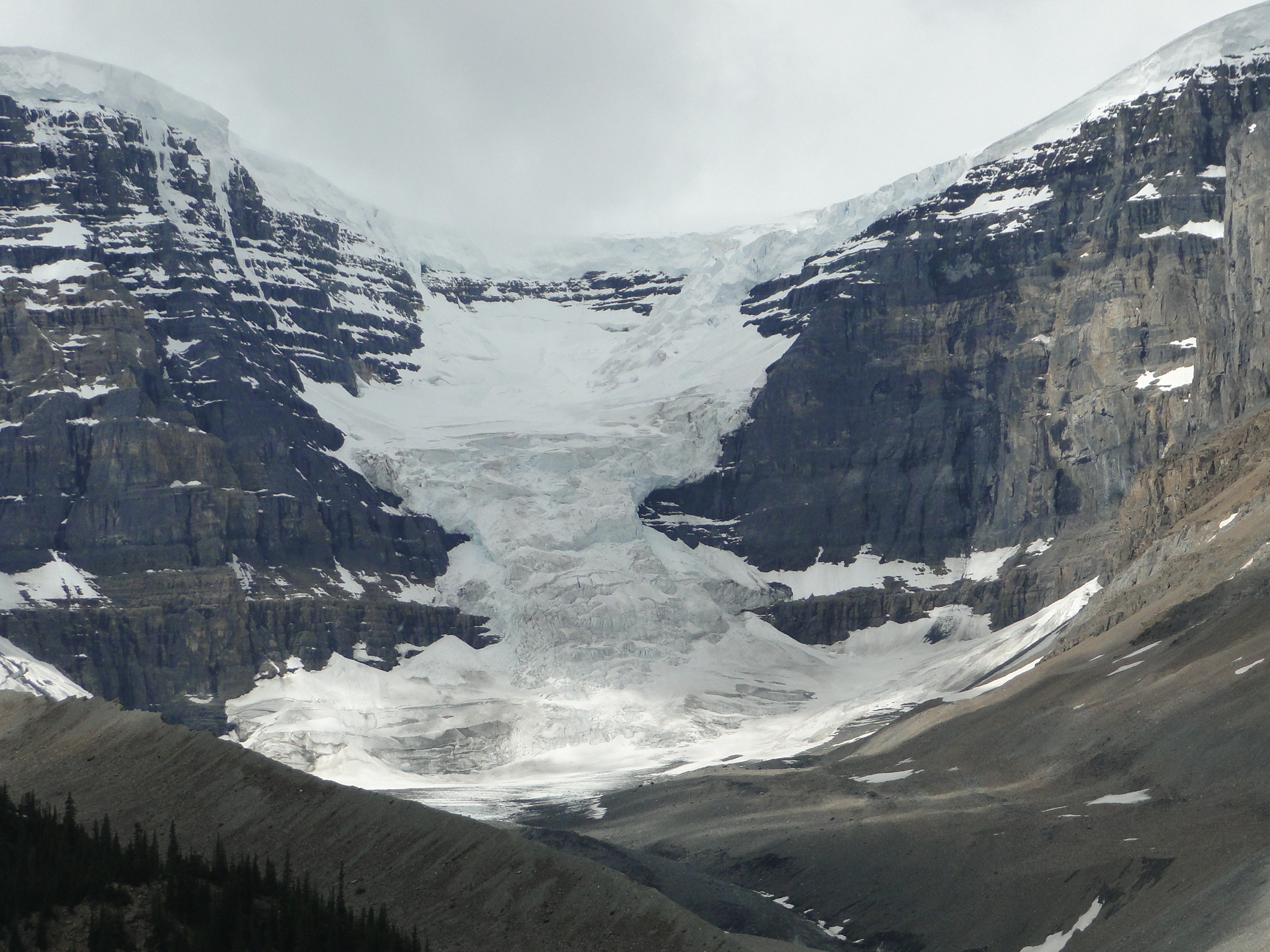
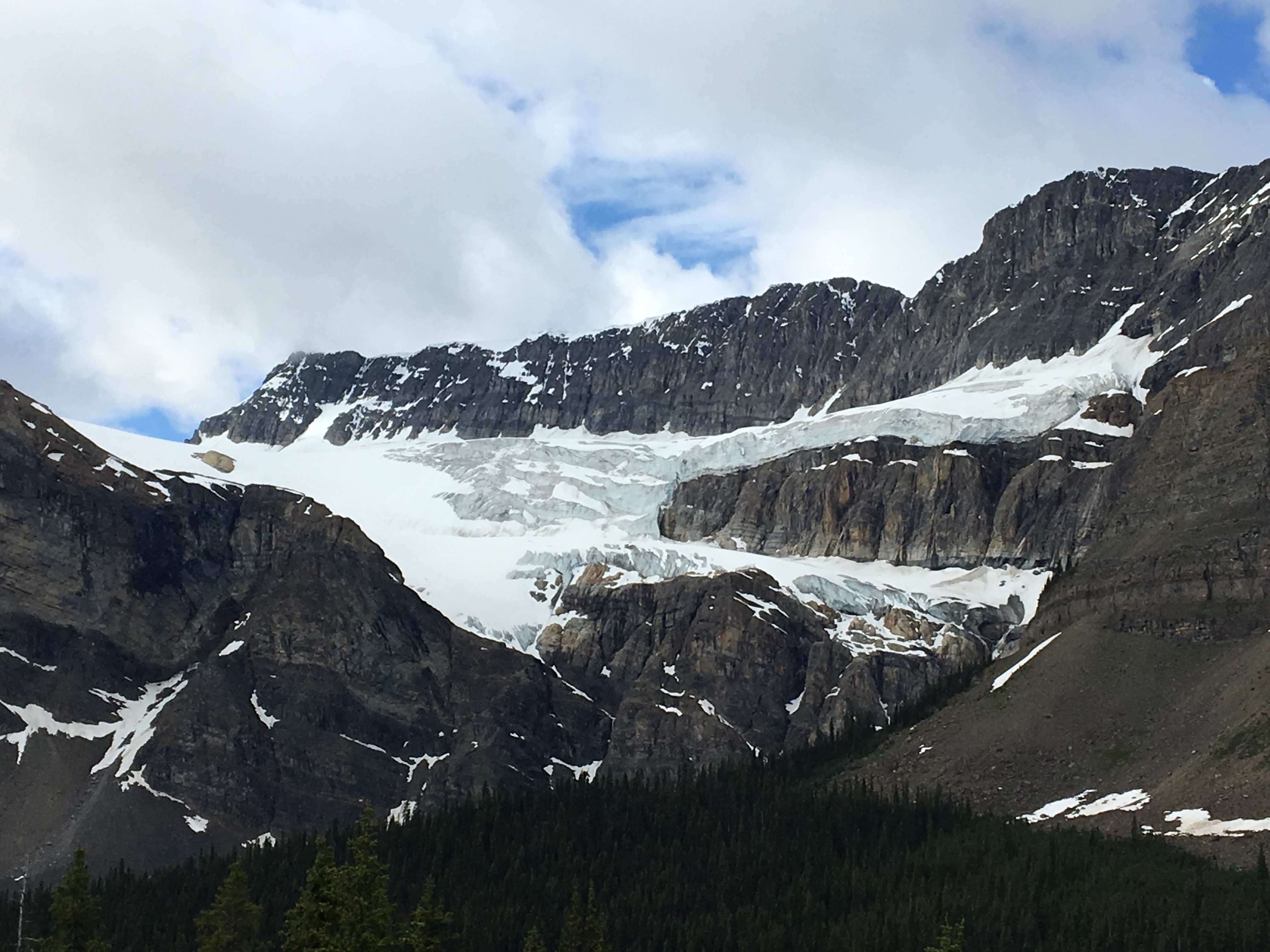
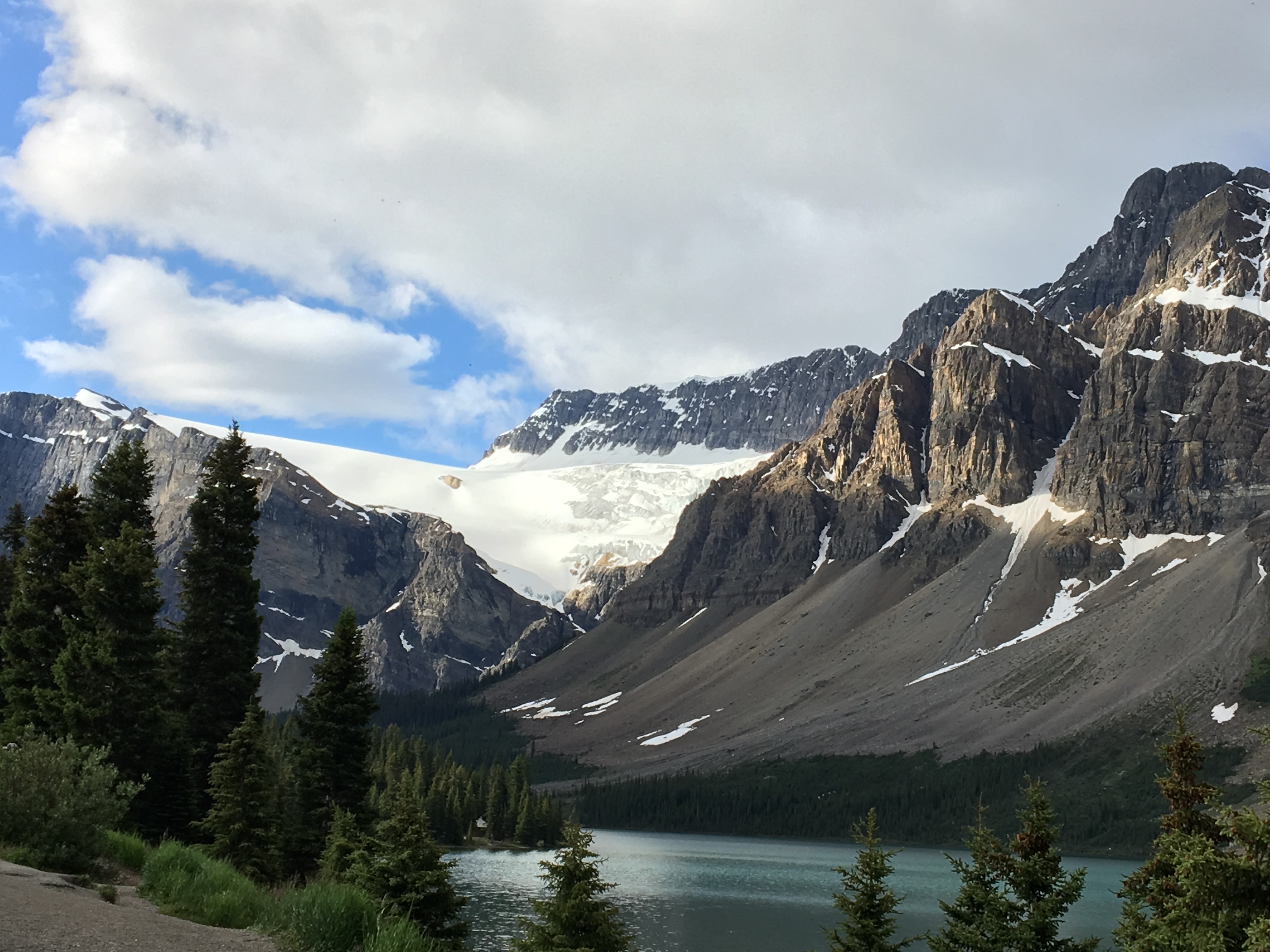
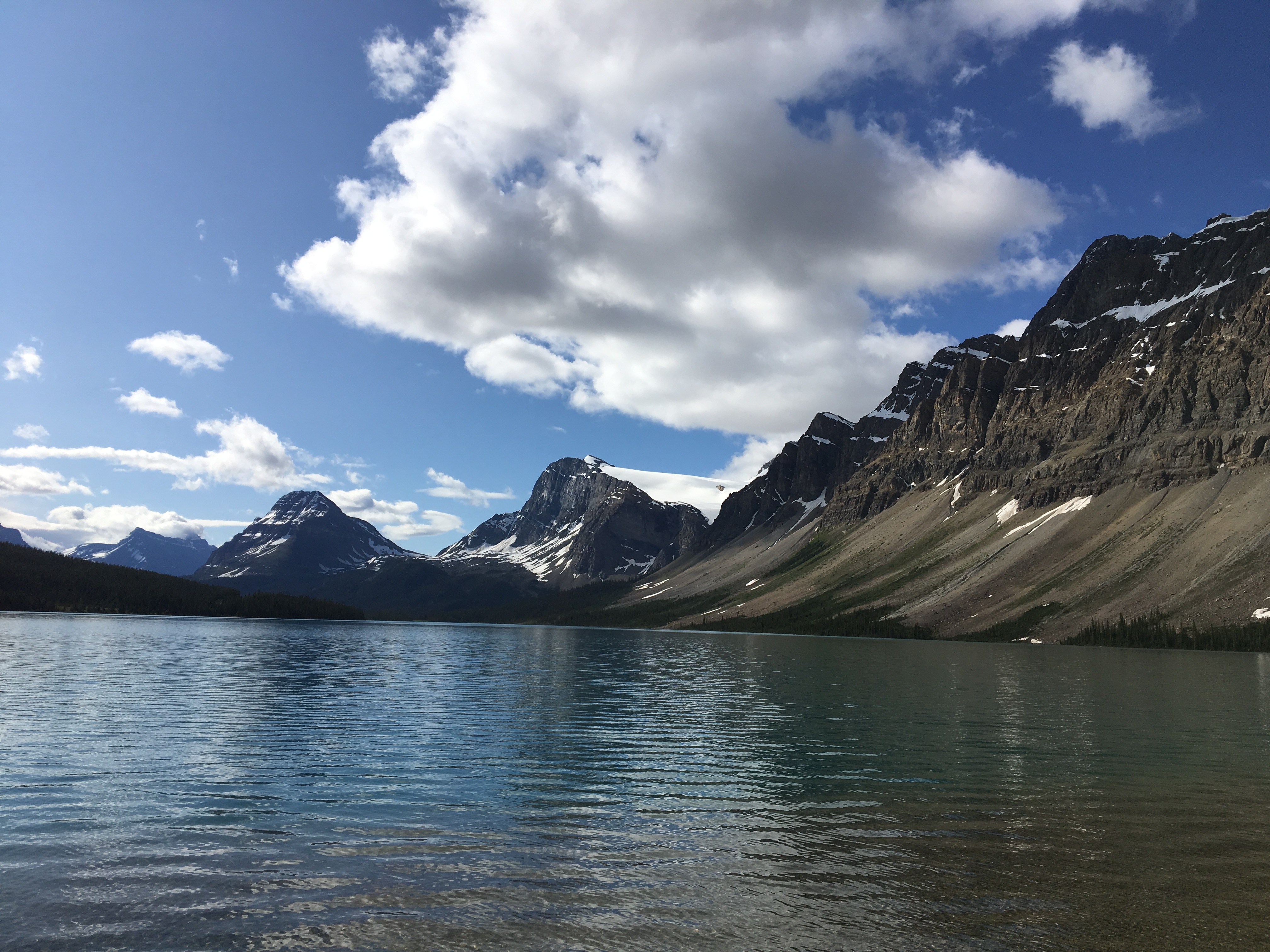
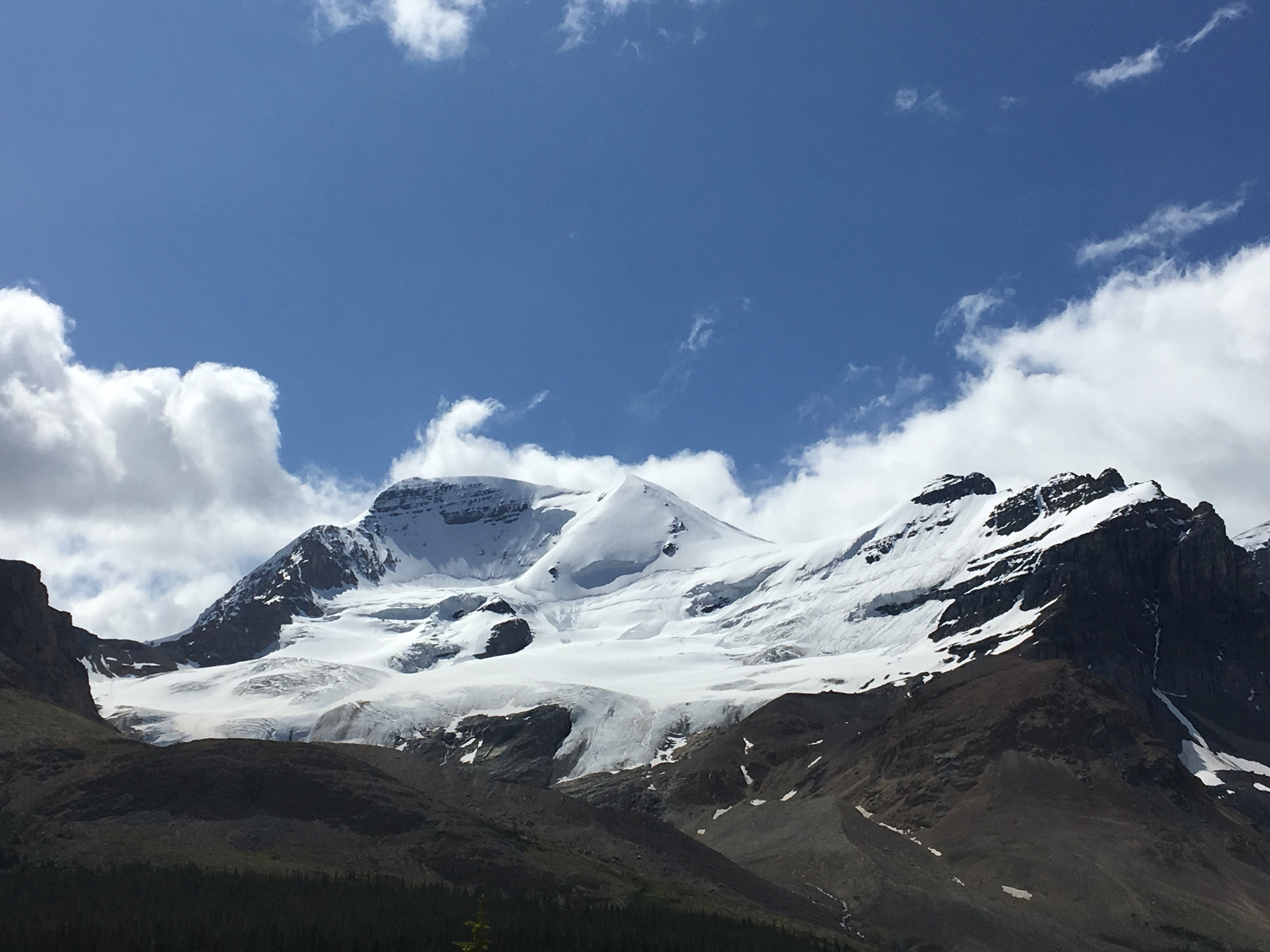
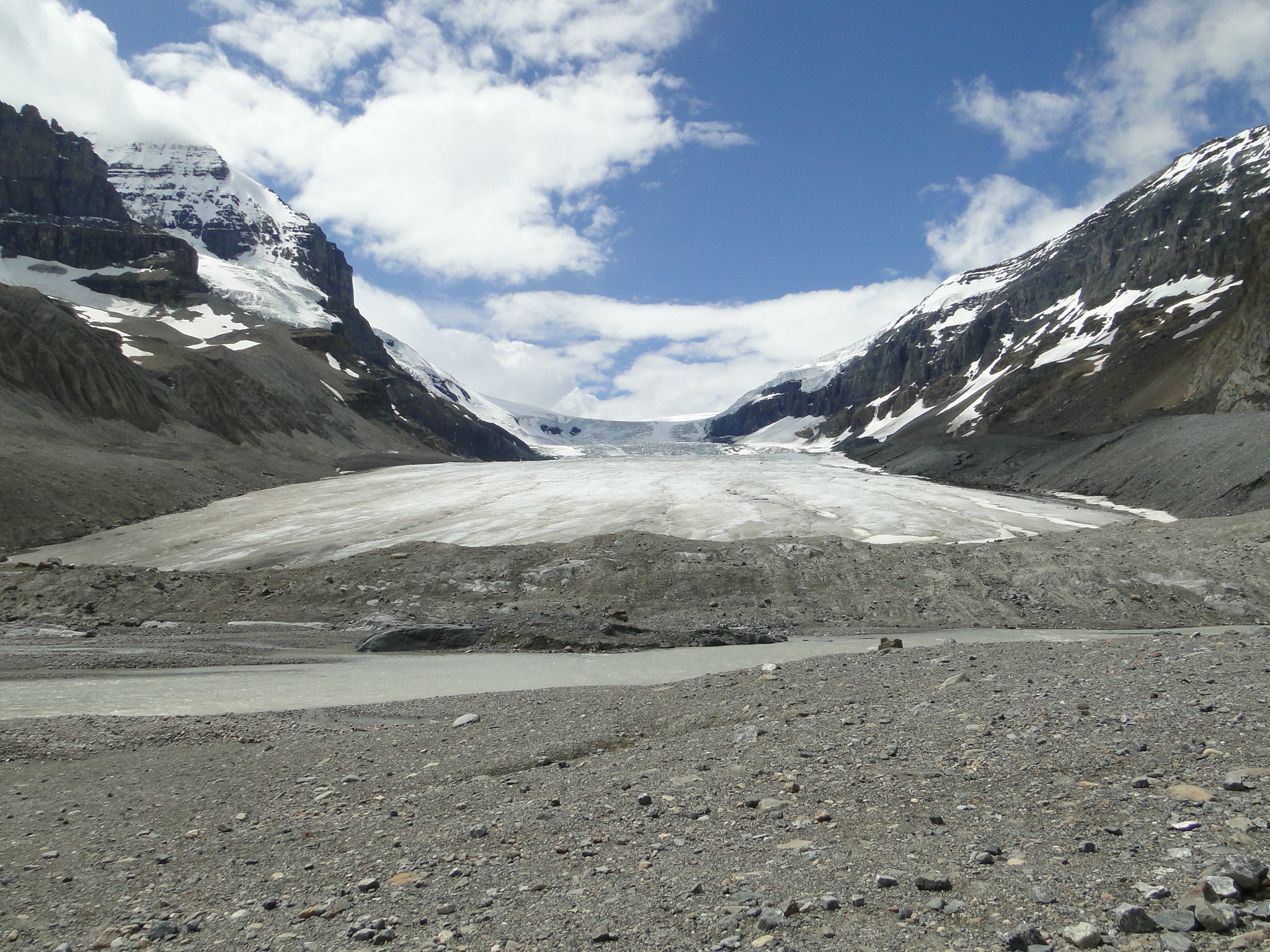
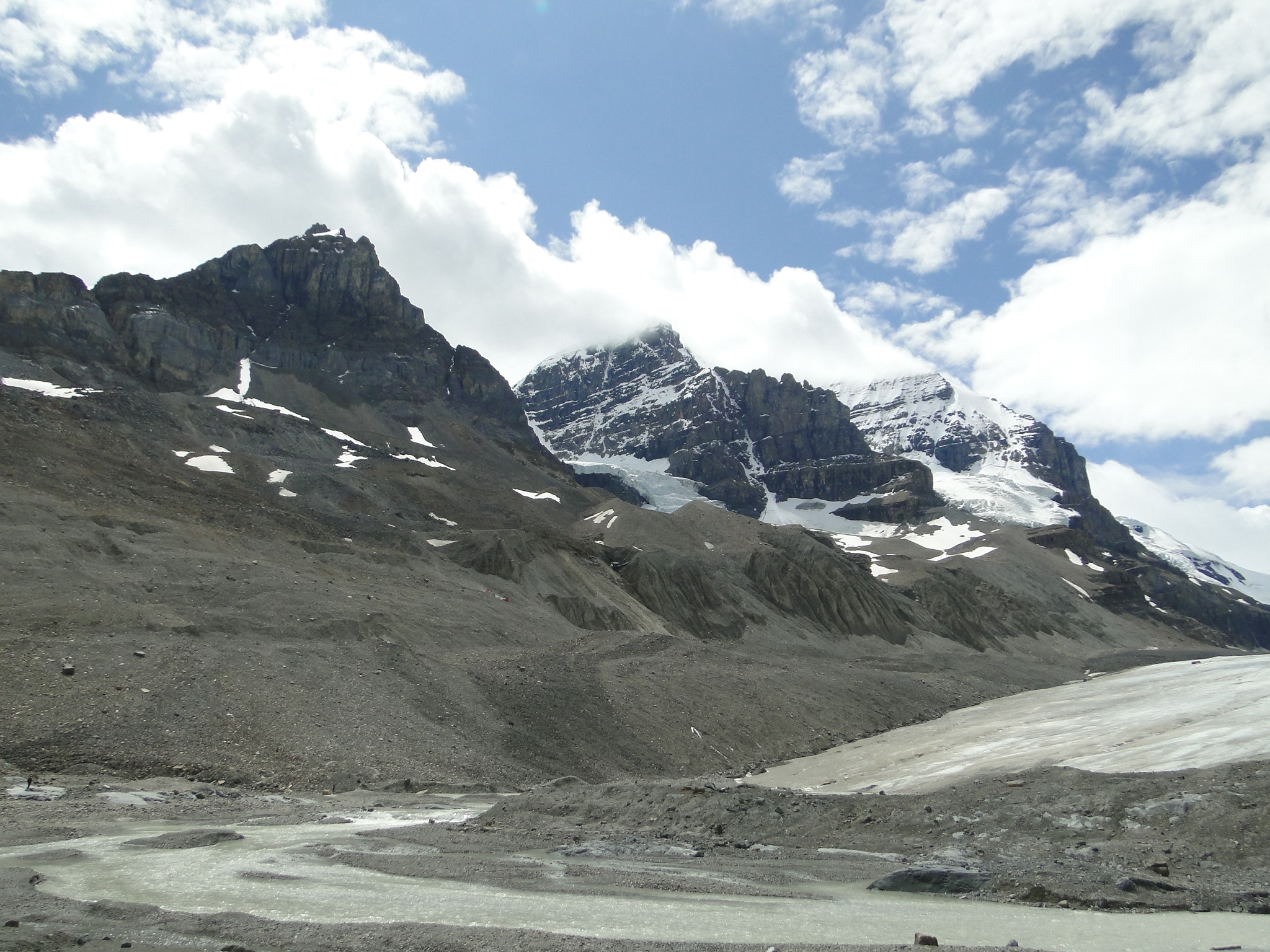
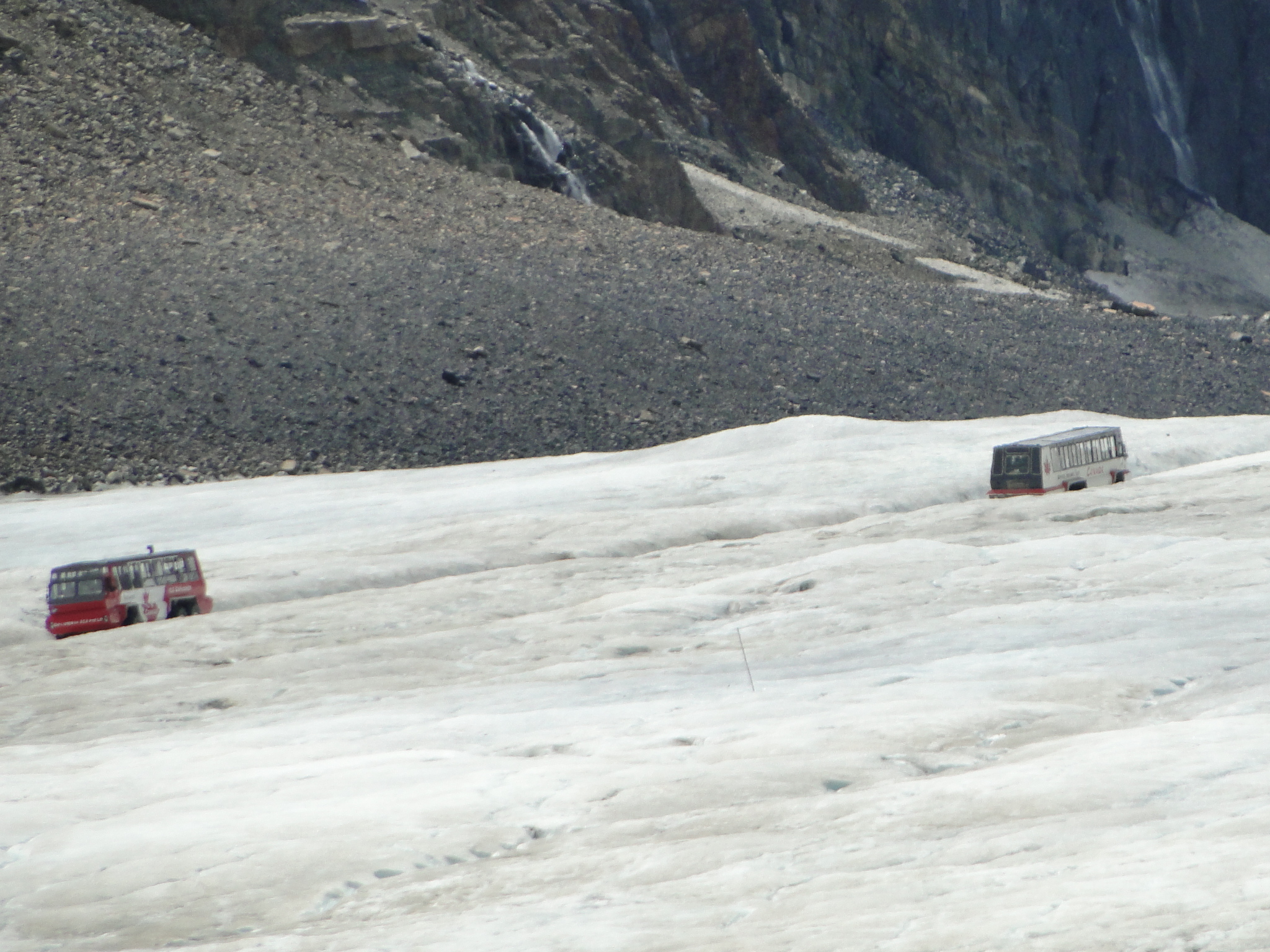
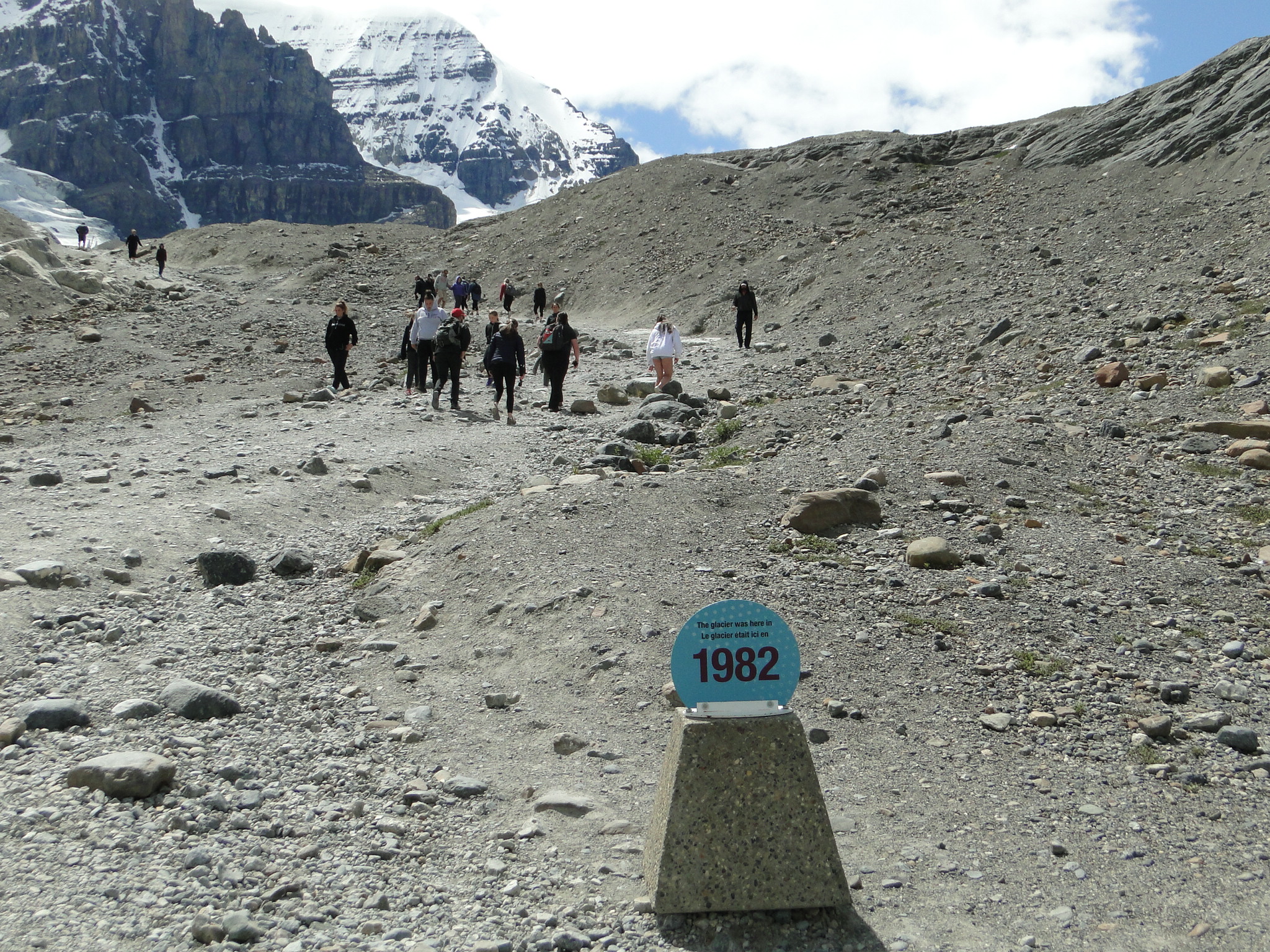
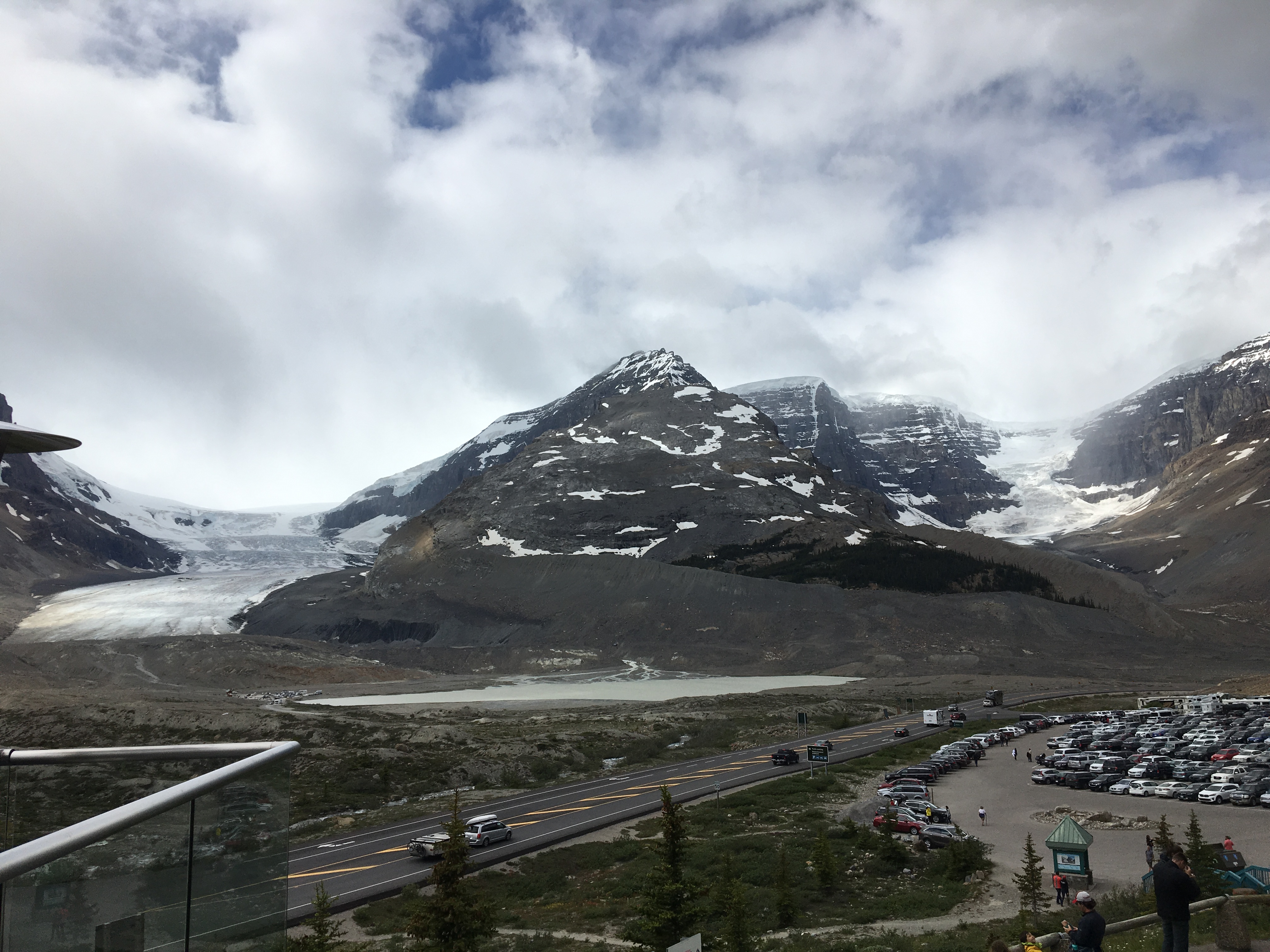
The largest and most visited of the glacial fields is the Columbia Ice Field, about midway on the Parkway. There is a rather large Visitor’s Center located at Icefield Centre with restrooms, a restaurant, gift shop and several tour opportunities. (Including snow-coach trips onto the glacier) We hiked to the toe of the Athabasca Glacier, one of the glaciers fed by the imposing Columbia Ice Field above. The Columbia Ice Field, the largest ice field in the Rocky Mountains, feeds six major glaciers – Athabasca, Castleguard, Columbia, Dome, Stutfield, and Saskatchewan. The Athabasca Glacier has receded significantly in recent years. We visited in 1976 and I’ve included a photo below of the timeline signs that record this unfortunate progression.
To travel the Ice Fields Parkway properly, allow a full day or more. There are several lodging opportunities along the route and one can easily spend a week exploring, hiking and photographing this enchanting and beguiling valley.
At the western end of the Parkway, the road lands in Jasper, a beautiful, western style town surrounded by fascinating mountains. The town itself has a wonderful warm and inviting feeling. There are many dining choices, the architecture is a mix of classical western and modern but quite inviting and the town can easily be a destination.
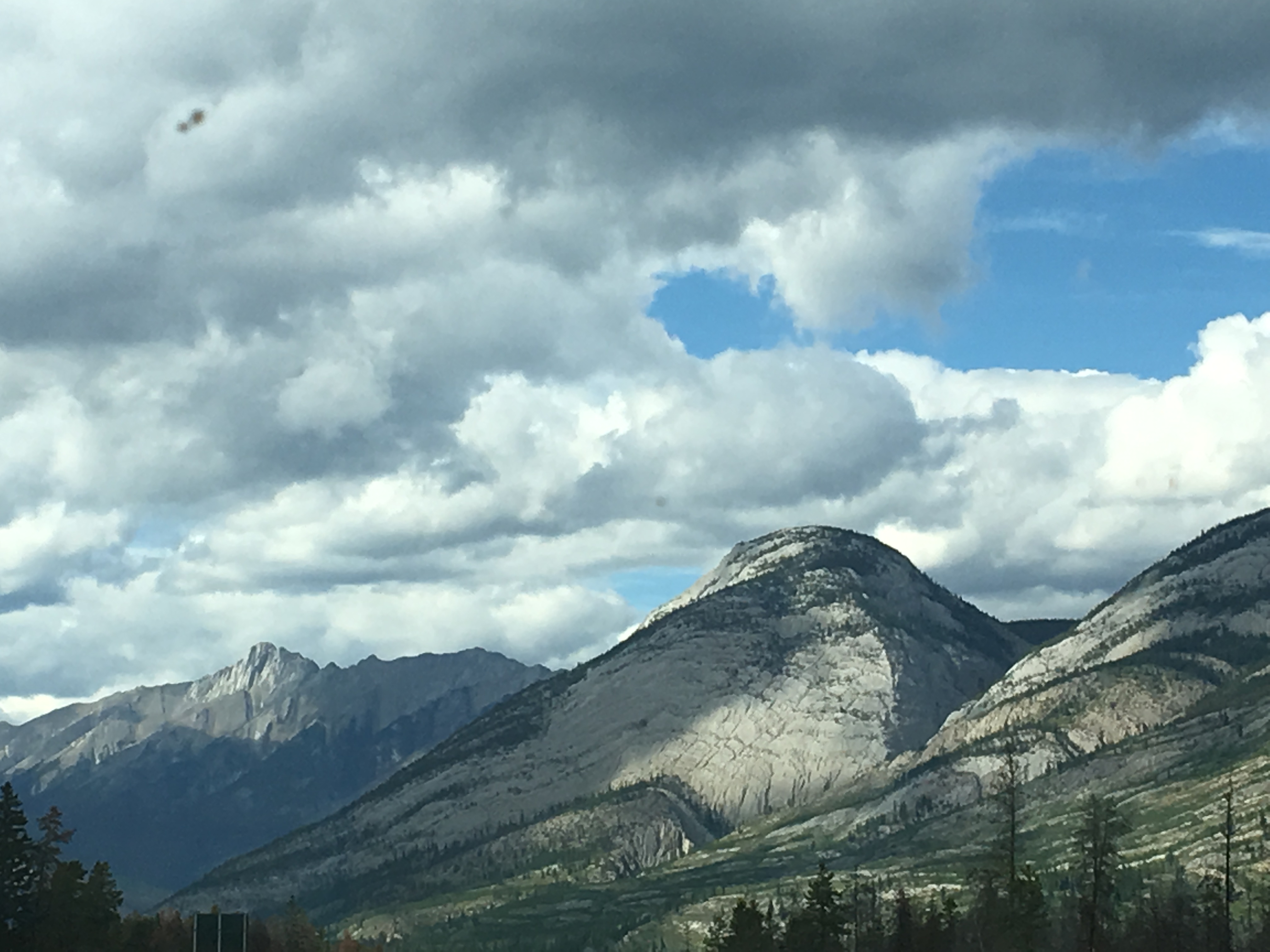
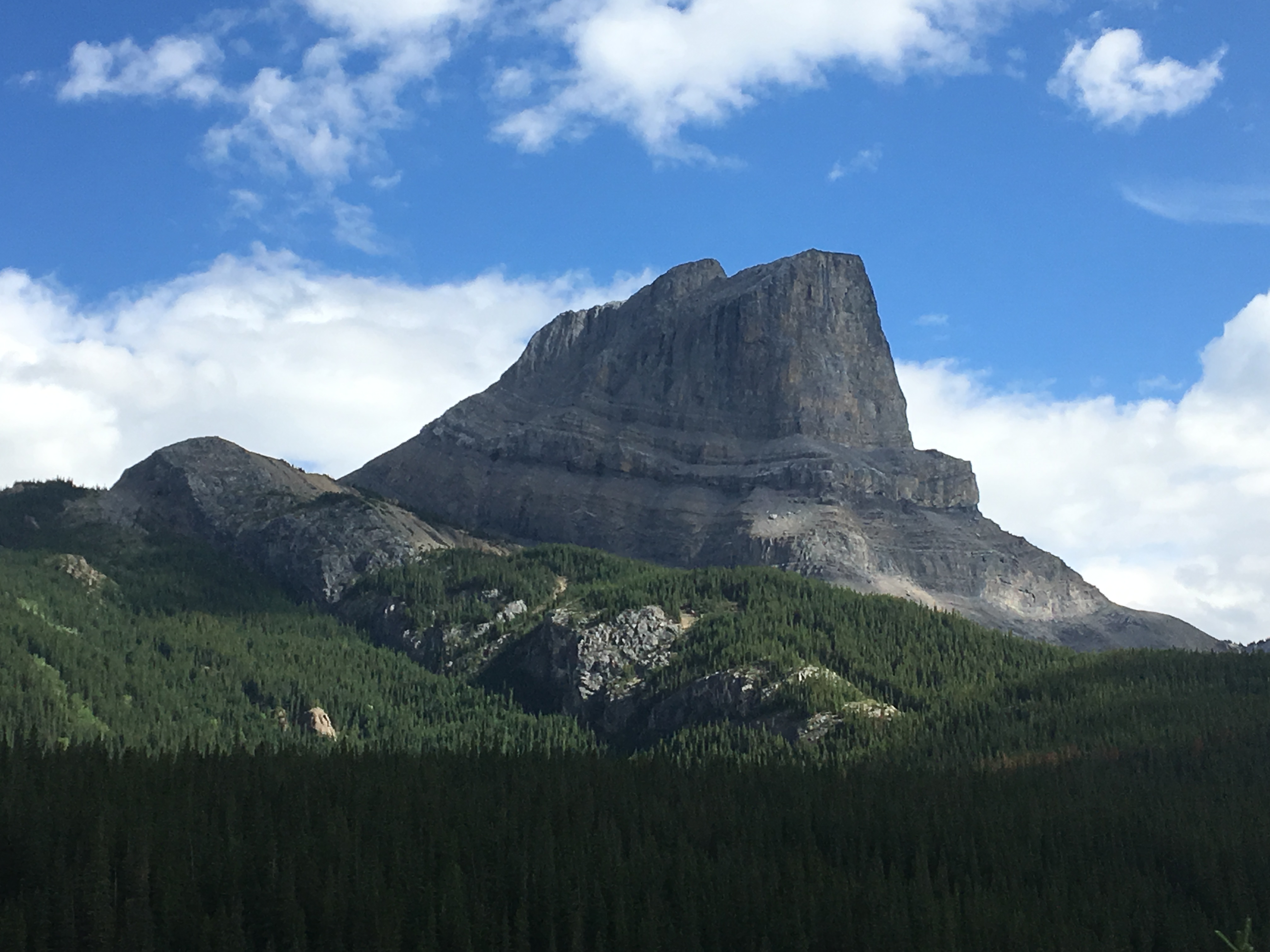
The road north from Jasper leads us into the interior of Alberta and eventually westward into British Columbia. This begins the most remote portion of our journey to date so I will cap this post while we still have WIFI. Until the next posting, peace.
Jay & Ellen


The pictures are awesome and the receding glacier is very sad.
LikeLike
Continue to enjoy and be safe.
LikeLike
Jay, thanks for sharing all the beautiful photos of your trip. John and I are planning a trip to the Canadian rockies next summer. When you and Ellen get settled in St. Augustine we will get together. Give Ellen my best.
Barbara
LikeLike
Again awesome pics ! The Canadian Rockies look spectacular. You’re having a great trip. Looking forward to yout next post. Safe travels..
Ron
LikeLike
The photos in each of your posts are more spectacular than the last. They always leave me wanting to see more. How wonderful you’re able to enjoy this trip of a lifetime together!
LikeLike
“And the golden poppies are blooming on the banks of Lake Louise.” One might think you get immune to all the beautiful places you’re visiting, but we know better. Say hi to Sergeant Preston and ask him how he keeps his uniform so clean and well-pressed.,
LikeLike
Wow, Wow, WOW! The photos and descriptions in this installment are just stunning. I look forward to each and every post. Sending love to you and Ellen!
LikeLike
Jay & Ellen,
Such an inspirational adventure – brings back memories of our trip across Canada years back. We had never heard loons before. The turquoise of Lake Louise, car camping in July so very cold, bear jams along the highway. Thanks for the beautiful photos.
Jean & Chris
LikeLike